Is Garden of Life ethical?
RecommendedYes — Garden of Life scores 86/100 on EthiCompare, one of the stronger ratings in our database, with 3 of 3 ethics signals verified.
Garden of Life is a leading health and wellness brand recognized for its rigorous commitment to organic, non-GMO, and carbon-neutral production. As a Certified B Corp, the company maintains high ethical standards across its supply chain and product formulations.
| Check | Status | Evidence |
|---|---|---|
| Cruelty-free | verified | The brand is Leaping Bunny certified and does not conduct or commission animal testing. |
| Vegan options | verified | Garden of Life offers an extensive range of certified vegan products, including proteins, vitamins, and probiotics. |
| Third-party certified | verified | We record 6 distinct certifications across this brand's products. |
| Certifications | on file | USDA Organic, Non-GMO, Vegan, B Corp, Certified Carbon Neutral |
Scored with our public methodology. Profile last updated 2026-10-14.
Garden of Life at a glance
Garden of Life offers 3 products on EthiCompare across Health & Wellness, Food & Nutrition, with an average ethics score of 86/10 and recurring certifications including USDA Organic, Non-GMO, Vegan.
Is Garden of Life ethical and cruelty-free? Read the verdict
Our editorial read on Garden of Life
Written from this brand's own listings, recorded certifications and ownership records in our database — never from generated or marketing copy. How we research brands
What our catalogue shows
We currently track 3 Garden of Life products across Health & Wellness, Food & Nutrition. Each one is scored 0–100 on ethics using the certifications, ingredient and material disclosures, packaging claims and sourcing information attached to its listing.
Across the scored range, Garden of Life averages 86/100, with individual products between 82 and 88. The average describes only the products we have scored — it is not a verdict on every product the company sells.
The highest-scoring Garden of Life listing in our catalogue is Organic Daily Multi-Vitamin for Women at 88/100, shown in the range table below with the rest of the line-up.
Certifications on file
The following credentials appear on Garden of Life's listings or brand profile in our database: USDA Organic, Non-GMO, Vegan, B Corp, Certified Carbon Neutral, NSF Certified, Certified B Corp, Non-GMO Project Verified, Leaping Bunny, Informed Choice, and 1 more. A certification is recorded when it appears on a product listing or the brand's published materials; we do not independently audit certificate scope, so confirm current status in the scheme's own directory before relying on it.
For animal-testing claims specifically, Leaping Bunny is the relevant credential in our records. Coverage can vary by product line and region, so treat it as a strong signal rather than a blanket guarantee for everything Garden of Life sells.
Recorded policies
Our records describe Garden of Life's animal-testing position as follows: "The brand is Leaping Bunny certified and does not conduct or commission animal testing."
Garden of Life is recorded as not selling through mainland China retail channels, which avoids the post-market testing risk attached to that market.
On vegan suitability, our records note: "Offers an extensive range of certified vegan products, including proteins, vitamins, and probiotics."
Garden of Life's stated sustainability commitments, as recorded in our database: "Certified Carbon Neutral company focusing on renewable energy and PCR plastic packaging."
Policy statements above are the brand's own words as recorded in our database, shown so you can weigh them against the third-party credentials. Where a statement and a certification disagree, the certification is the stronger evidence.
Garden of Life ethics profile
Updated 10/14/2026Overview
Founded in 1999 and headquartered in Palm Beach Gardens, Florida, Garden of Life has established itself as a pioneer in the 'whole food' supplement industry. The brand is built on the philosophy of using real, recognizable organic ingredients rather than synthetic isolation. In 2017, the company was acquired by Nestlé Health Science, but it has maintained its independent B Corp status and continues to expand its environmental and social governance (ESG) initiatives. Garden of Life stands out for its extensive range of clean-label products, spanning from vitamins and probiotics to specialized herbal extracts and plant-based proteins.
Certifications
One of Garden of Life's strongest assets is its robust list of third-party certifications, which provide transparency and verification for its marketing claims. Most products carry the USDA Organic seal and are Non-GMO Project Verified. The brand is a Certified B Corporation, meaning it meets high standards of verified social and environmental performance. Additionally, many of its sports nutrition and protein products are 'Informed Choice' or 'NSF Certified for Sport,' ensuring they are free from banned substances. The company also holds several animal welfare and sustainability-specific marks, including Leaping Bunny and Carbon Neutral certification.
Animal testing & vegan range
Garden of Life demonstrates a strong commitment to cruelty-free practices. The brand is Leaping Bunny certified, which is the gold standard in animal welfare, ensuring that no animal testing is conducted at any stage of product development. While Garden of Life does offer some products derived from animal sources (such as bovine collagen or whey protein), they maintain a vast selection of 100% vegan-certified options. Their vegan range is frequently PETA-approved and formulated without any animal-derived binders, fillers, or capsules, utilizing plant-based alternatives like pullulan or organic fermented grains instead.
Sustainability pledges
The brand has made significant strides in environmental stewardship. Garden of Life is a CarbonFree® Certified organization and was the first supplement brand to be certified Carbon Neutral by Carbonfund.org. This applies not only to their corporate operations but also to the manufacturing and shipping of their products. They utilize renewable energy sources, such as wind power, for their primary facilities and are actively working on reducing plastic waste through the adoption of post-consumer recycled (PCR) materials in their packaging. Furthermore, their participation in 1% for the Planet for specific product lines demonstrates a commitment to funding environmental non-profits.
Sourcing & labor
Sourcing is a critical component of the Garden of Life ethos. The brand prioritizes 'Traceability,' allowing consumers to see where their ingredients come from—most notably their 'MyKind Organics' line, which is co-founded with Alicia Silverstone and focuses on heritage seeds and traditional farming methods. By utilizing USDA Organic standards, the brand ensures that their farmers avoid synthetic pesticides and fertilizers, which protects both soil health and farmworker safety. As a B Corp, they are audited on their labor practices, ensuring fair treatment and community engagement within their global supply chain.
Controversies context
There are no major ethical or environmental controversies on record specifically regarding Garden of Life’s direct operations. The most frequent point of discussion among ethical consumers is the brand\'s acquisition by Nestlé in 2017. Some loyal customers expressed concerns that the parent company’s historical controversies might impact Garden of Life’s standards. However, Garden of Life has proactively maintained and even expanded its certifications (such as achieving B Corp status and Carbon Neutrality) since the acquisition, suggesting that its internal ethical frameworks remain intact and independent.
Bottom line
Garden of Life remains one of the most highly-rated brands for consumers seeking clinical-grade supplements with a conscience. Their high ethics scores (averaging between 82 and 92) reflect a deep-seated commitment to organic farming, carbon reduction, and cruelty-free testing. While their ownership by a large multinational may be a deterrent for some, theircontinued adherence to rigorous third-party auditing makes them a reliable choice for ethical wellness.
Certifications
Sustainability pledges
Certified Carbon Neutral company focusing on renewable energy and PCR plastic packaging.
Animal testing policy
The brand is Leaping Bunny certified and does not conduct or commission animal testing.
Vegan range
Garden of Life offers an extensive range of certified vegan products, including proteins, vitamins, and probiotics.
Sold in mainland China
No — avoids mainland China retail channels.
Standards & certifications
Verified credentials appearing across Garden of Life's product range.
Ethics breakdown
Average scores across our scoring pillars.
- Animal Welfare96.7/10
- Environment91.3/10
- Sourcing90/10
- Transparency85.3/10
- Labor81.7/10
Categories covered
Where Garden of Life shows up across our directory.
- Health & Wellness2
- Food & Nutrition1
What reviewers highlight
Strengths mentioned most often across Garden of Life's products.
- ✓Whole food sourced ingredients
- ✓Gently on the stomach
- ✓Comprehensive third-party certifications
- ✓Certified Organic and Non-GMO Project Verified
- ✓No synthetic binders or fillers
- ✓Easily digestible compared to synthetic multis
Range at a glance
How consistent Garden of Life is across everything we have scored.
3
products scored
82–88
ethics score range
100%
carry a certification
$$
price tiers
| Product | Category | Price | Ethics |
|---|---|---|---|
| Organic Daily Multi-Vitamin for Women | Health & Wellness | $$ | 88 |
| Garden of Life MyKind Organics Women’s Multi 40+ | Food & Nutrition | $$ | 88 |
| Organic Daily Multi-Vitamin | Health & Wellness | $$ | 82 |
Brand ethics profile
Garden of Life is a leading health and wellness brand recognized for its rigorous commitment to organic, non-GMO, and carbon-neutral production. As a Certified B Corp, the company maintains high ethical standards across its supply chain and product formulations.
- Animal-testing policy
- The brand is Leaping Bunny certified and does not conduct or commission animal testing.
- Sold in mainland China
- No — avoids mainland China channels.
- Vegan range
- Garden of Life offers an extensive range of certified vegan products, including proteins, vitamins, and probiotics.
- Sustainability pledges
- Certified Carbon Neutral company focusing on renewable energy and PCR plastic packaging.
Controversy timeline
(5 recorded)- High
Recall of Certain Vitamin D Products Due to Super-Potency
In 2017, Garden of Life voluntarily recalled a limited batch of its Vitamin D3 liquid drops because they contained more than the labeled amount of Vitamin D, posing a risk of toxicity to consumers, especially infants and children. The recall was conducted in coordination with the FDA and was limited to specific lot numbers.
Source Nestlé Acquisition and Alleged Loss of 'Clean' Brand Identity
After Nestlé acquired Garden of Life in 2017, consumer advocacy groups and some investors criticized the deal, arguing that the brand’s 'clean' and organic positioning conflicted with Nestlé’s history of unethical practices, including child labor in cocoa supply chains. While not a formal lawsuit, it became a public controversy affecting brand trust.
Source- Medium
Class Action Over 'Raw' and 'Living' Mislabeling
In 2015, a consumer class-action lawsuit claimed that Garden of Life's use of 'RAW' and 'Living' on supplement labels was deceptive because the products were processed at temperatures that could destroy live probiotics and enzymes, contrary to the implication of being raw. The suit sought damages for misleading marketing.
Source - Medium
False Advertising Lawsuit Over 'Non-GMO' Claims
In 2014, a class-action lawsuit alleged that Garden of Life falsely advertised certain products as 'Non-GMO' when they contained ingredients from crops that are almost exclusively genetically modified, such as soy lecithin. The plaintiffs argued that the company misled consumers into paying premium prices. The case was part of a broader wave of litigation against supplement brands over GMO labeling.
Source - Medium
FDA Warning Letter for Unsubstantiated Health Claims
In 2010, the U.S. Food and Drug Administration issued a warning letter to Garden of Life for making unapproved drug claims on its product labels, including statements that certain products could treat or prevent diseases like cancer and diabetes. The FDA demanded immediate correction and removal of the claims. The company revised its labeling in response.
Source
Sustainability commitments
"Packaging is made from 100% recyclable glass and the company uses renewable energy for its primary manufacturing facilities."
"The brand utilizes closed-loop recycled paper for packaging and is a Carbon Neutral certified organization."
"Certified Carbon Neutral by Carbon Trust. Packaging is recyclable, and the brand invests heavily in regenerative agriculture initiatives."
All Garden of Life products
3 of 3 products
A whole-food based multivitamin sourced entirely from real fruits, vegetables, and herbs, prioritizing clean extraction and rigorous third-party testing.

A whole-food multivitamin specifically formulated for women over 40, made from over 30 powdered fruits, vegetables, and herbs with no synthetic binders.
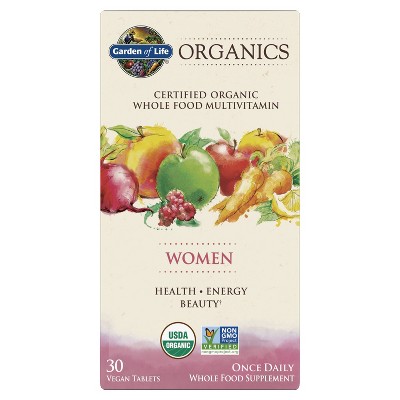
A whole-food based multivitamin sourced from over 30 organic fruits, vegetables, and herbs, prioritizing clean extraction and carbon neutrality.
Common questions about Garden of Life
Is Garden of Life cruelty-free?+
We have no cruelty-free certification on file for Garden of Life's scored products. Absence of a certification is not proof of animal testing, but it does mean nothing independent has been verified.
How does Garden of Life score overall?+
Garden of Life averages 86/100 across the 3 products we have scored, using public certifications, sourcing disclosures and controversy records.
Who owns Garden of Life?+
Parent-company ownership changes what your money supports. See our brand ownership map for the current group structure and any conflicting parent-company records.
What are the best alternatives to Garden of Life?+
Our alternatives page ranks comparable products by ethics score with a side-by-side difference table, so you can see exactly which pillar improves.