Uncertified palm oil: why to avoid them and what to use instead
Conventional expansion drives tropical deforestation, peatland burning and orangutan habitat loss across Indonesia and Malaysia.
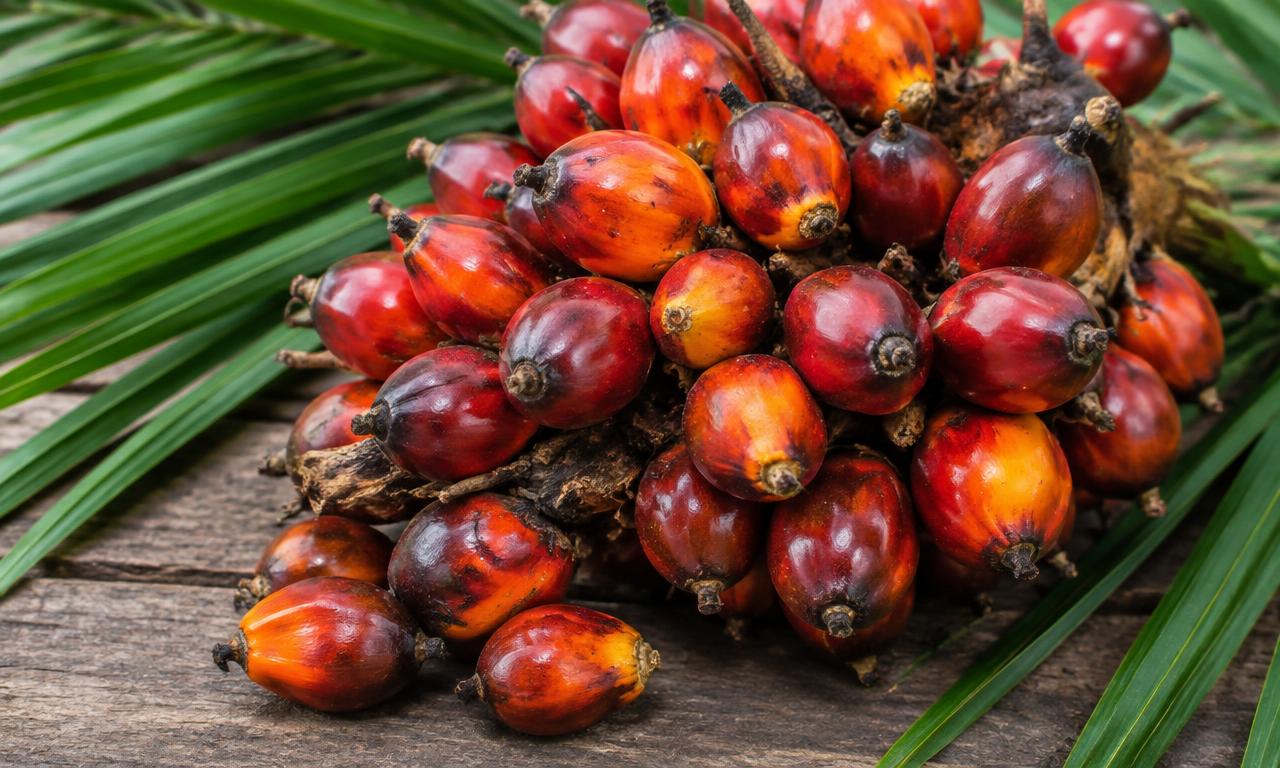
The short answer
Boycotting palm oil generally backfires — substitute oils need four to ten times more land per tonne. Demanding RSPO Segregated supply, not credit offsets, is the higher-impact position.
- Where it hides
- Soap, chocolate and snacks, instant noodles, cosmetics, biofuel
- Cleaner swap
- RSPO Segregated or Identity Preserved certified palm, or formulations based on shea, coconut, sunflower or rapeseed.
- Also listed as
- Sodium palmate, Palmitate, Elaeis guineensis, Glyceryl stearate, Cetyl alcohol (palm-derived)
The label names to scan for
- Palm oil / palm kernel oil (uncertified)
- Sodium palmate / sodium palm kernelate
- Elaeis guineensis oil
- Palmitate, palmitic acid (palm-derived)
- Vegetable oil (unspecified)
- RSPO 'Book and Claim' credits only
What regulators have actually done
The EU Deforestation Regulation requires due-diligence proof that palm oil placed on the EU market is deforestation-free, with compliance deadlines from late 2025 for large operators.
Why a boycott is the wrong lever
Oil palm yields roughly 3.3 tonnes per hectare against 0.7 for rapeseed and 0.4 for coconut. Shifting demand to those crops expands total agricultural land, often into other sensitive habitats. Certification that actually segregates deforestation-free supply targets the real problem.
Reading RSPO claims properly
Identity Preserved and Segregated mean physically separated certified oil. Mass Balance mixes certified and conventional. Book and Claim is credit trading only, with no physical link. A brand claiming 'RSPO member' without naming a supply model has told you almost nothing.
Read an ingredient in context
An unfamiliar chemical name is not a safety verdict. Separate animal origin, personal allergy, environmental persistence and regulated use: these are different reasons for examining a formula.
- 01
Copy the exact ingredient name and identify the product type: food, rinse-off cosmetics and leave-on cosmetics follow different rules.
- 02
Check the relevant regulator or standard. An ingredient-list entry does not reveal its concentration or prove animal origin for substances with several possible sources.
- 03
For a known allergy, follow professional advice and the complete label. Ask the manufacturer about unclear origins rather than treating missing evidence as proof.
Match the concern to the evidence
| Concern | Useful evidence | Do not infer |
|---|---|---|
| Animal origin | Product certification or sourcing statement | All glycerin is animal-derived |
| Contact allergy | Full formula and individual clinical advice | Natural means non-allergenic |
| Restricted use | Product category, concentration and local rules | One restriction is a universal ban |
| Environmental persistence | Substance-specific evidence and disposal context | A safe-use limit settles lifecycle impact |
Hazard and exposure are not the same. A permitted use is not a guarantee for every person, and a ‘free-from’ claim is not proof that the replacement formula is safer.
Uncertified palm oil: frequently asked questions
Should I avoid palm oil completely?+
No. Alternative oils require substantially more land per tonne. Prioritise RSPO Segregated or Identity Preserved certified palm instead.
What are the hidden names for palm oil?+
Sodium palmate, sodium palm kernelate, elaeis guineensis, palmitate, glyceryl stearate and unspecified 'vegetable oil' are all common palm-derived label entries.