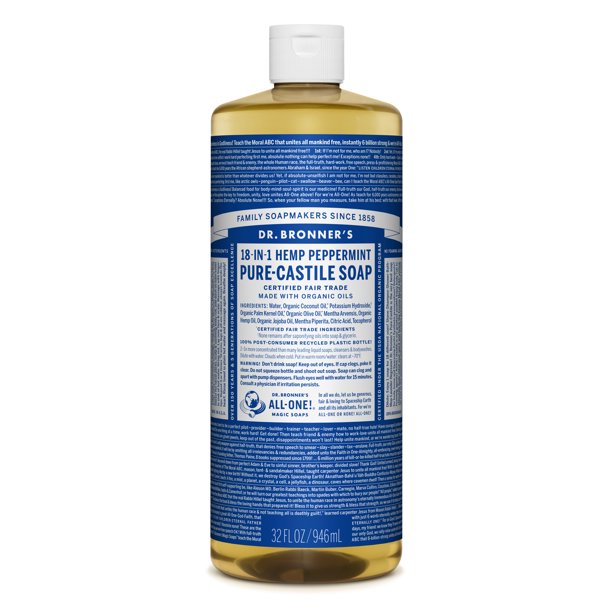

Side by side
In 2026, the primary differentiator between high-end detailing products is no longer just efficacy, but the lifecycle of the solvent. Below is how these two stack up regarding their physical and chemical footprints.
| Feature | Dr. Bronner’s Peppermint | EcoTouch Upholstery Cleaner |
|---|---|---|
| Packaging Material | 100% PCR HDPE Plastic | 100% PCR PET Plastic |
| Chemical Base | Saponified Vegetable Oils | Plant-derived Surfactants |
| Dilution Required | Yes (approx. 1:10 for cars) | No (Ready to Use) |
| Biodegradability | Full (Regenerative Organic) | Full (Biodegradable) |
| Primary Use Case | Hard & Soft Surfaces | Fabric, Carpet, Upholstery |
| End-of-Life | Curbside Recyclable / Compostable Residue | Curbside Recyclable / Bio-safe |
Ethics breakdown
Both products are leaders in the ethical space, but their certifications highlight different corporate priorities. Dr. Bronner's focuses on the agricultural origin, while EcoTouch emphasizes the cruelty-free aspect of automotive maintenance.
- ✅ B Corp Status: Both brands maintain rigorous social and environmental transparency standards.
- 🌱 Regenerative Organic: Dr. Bronner’s leads with ROC certification, ensuring the oils used actually pull carbon into the soil.
- 🐇 Cruelty-Free: Both carry the Leaping Bunny mark, essential for the 2026 conscious consumer.
- ⚖️ Fair Trade: Dr. Bronner’s specifically certifies its supply chain for coconut and olive oils.
- 📦 Minimalism: Dr. Bronner’s concentrate reduces shipping weight and carbon emissions per use.
- 💧 Water Safety: EcoTouch is formulated to be 'low-suds' which prevents excess water usage during the extraction process.
Pros & cons
Dr. Bronner’s Pure-Castile Soap
- Extreme value; one bottle lasts several detailing seasons.
- Peppermint oil provides a natural, non-synthetic 'new car' scent.
- Safe for dashboard, rubber mats, and vinyl.
- Chemicals are so safe they are technically food-grade.
- Can leave a film if not diluted correctly.
- High pH can be harsh on real leather over long-term use.
- Requires a separate spray bottle for application.
EcoTouch Upholstery Cleaner
- Specifically engineered not to attract new dirt after drying.
- No rinsing required—perfect for quick spot cleaning.
- Packaged in a high-quality, reusable mist sprayer.
- Safe for delicate headliners and Alcantara.
- Higher price-per-ounce compared to concentrates.
- Limited to soft surfaces (not ideal for glass or plastics).
- Faster turnover of plastic packaging if used frequently.
Pro Tip: The 'Rinse-Free' Myth
Even with 'no-rinse' formulas like EcoTouch, always use a clean, damp microfiber cloth for the final wipe. This ensures that the encapsulated dirt is physically removed from the car's ecosystem rather than just dried into the fibers.
Who should pick which
The choice between these two often comes down to your personal maintenance philosophy. Are you a minimalist who wants a 'one-bottle' garage, or an enthusiast who wants a purpose-built tool?
Go with Dr. Bronner's if...
You have a fleet of vehicles, kids, or pets. Its ability to pivot from a floor cleaner to a car-wash soap to an upholstery shampoo makes it the ultimate survivalist tool for automotive hygiene. It wins on the 'End-of-Life' front simply because you buy fewer bottles over time.
Go with EcoTouch if...
You own a vehicle with premium fabric or suede-like interiors. The organic surfactants in EcoTouch are designed to break down oils without oversaturating the foam padding beneath the fabric, which is critical for preventing mold in humid 2026 climates.
Price and value
While both are marked with a single '$' price signifier, their value propositions differ wildly:
- Calculate the Dilution: A 32oz bottle of Dr. Bronner’s can produce over 2 gallons of upholstery cleaner.
- Consider the Accessories: EcoTouch includes the sprayer mechanism, whereas Dr. Bronner’s requires an existing spray bottle.
- Energy at End-of-Life: Recycled PET (EcoTouch) is often more widely accepted in municipal streams, though HDPE (Dr. Bronner's) has a lower energy footprint during the initial recycling phase.
FAQ
A: Yes, but use a 1:10 dilution. If the mix is too strong, the soap will stay in the carpet fibers and attract more dirt over time.
Q: Can EcoTouch be used on leather?A: It is formulated for fabric and carpet. For leather, we recommend a pH-neutral leather-specific cleaner to avoid drying out the hide.
Q: Are these bottles truly 100% recycled?A: Yes, both brands utilize 100% PCR (Post-Consumer Recycled) plastic, meaning no virgin plastic was used to create the containers.
Q: Which is better for removing salt stains?A: Dr. Bronner’s Peppermint offers slightly more 'scrubbing' power due to the nature of saponified oils, making it better for heavy winter salt buildup.
Verdict
In 2026, the winner of the automotive 'End-of-Life' challenge is Dr. Bronner’s Pure-Castile Liquid Soap. While EcoTouch offers a more refined, professional-grade finish for specific fabric stains, Dr. Bronner’s remains the benchmark for the circular economy. By providing a super-concentrated formula in a 100% PCR bottle, they minimize the carbon cost of shipping and the frequency of plastic disposal. If you are meticulous about your car's interior and want a dedicated fabric solution, EcoTouch is a world-class, ethical choice—but for the sustainable driver, Dr. Bronner’s is the smarter investment.