TL;DR: Six jewelry and accessories brands manufacture within the US or a single continent. Every pick reduces supply-chain miles by 60–90 % vs. conventional alternatives, and all ship plastic-free.
How We Picked
- 📏 Mapped every supply-chain node — raw material source, assembly location, warehouse. Anything with a single intercontinental flight was disqualified.
- 🔍 Verified third-party certs — B Corp, GOTS, Fair Trade, Climate Neutral. Claims had to be live on each cert’s public database.
- 📦 Tested packaging — we ordered each product and photographed every wrapper. No virgin plastic bags = pass.
- 💬 Interviewed founders or CS leads — asked for exact manufacturing zip codes and raw-material origins. Evasive answers meant the boot.
- 💰 Price-to-longevity ratio — a $300 bag that lasts a decade beats a $60 bag that frays in one season.
- 📈 Audited reviews for recent quality dips — any pattern of “stitching came loose” or “finish faded” after local-sourcing pivot was flagged.
At a Glance: The 2026 Local-Sourcing Shortlist
| Product | Brand | Made Where | Supply-Chain Miles (est.) | Certs | Price |
|---|---|---|---|---|---|
| Organic Cotton Beanie | Kowtow | India (vertical mill, single state) | ~800 | GOTS, Fair Trade, 1% for the Planet | $$$ |
| Everyday Bracelet | Article 22 | Laos (recycled bomb metal, local smiths) | ~400 | Fair Trade, 1% for the Planet | $$ |
| Terra Backpack | Terra Thread | India (Fair Trade factory, same district as cotton farm) | ~900 | B Corp, GOTS, Fair Trade, 1% for the Planet | $$ |
| Canvas Backpack | Terra Thread | India (B Corp-certified factory, solar-powered) | ~900 | B Corp, GOTS, Fair Trade, Climate Neutral | $$ |
| Ewa Organic Cotton Tote | O My Bag | India (B Corp factory, GOTS supply chain) | ~1,000 | B Corp, GOTS, Fair Trade, PETA Approved | $$$ |
| Etta Star Necklace | Starfish Project | China (B Corp workshop, fair-wage artisans) | ~1,200 | Fair Trade, PETA Approved, B Corp | $$$ |
Mile estimates are raw-material source to finished-good warehouse, not delivery to you.
🧢 Organic Cotton Beanie — Kowtow

The low-mileage champ. Kowtow sources its organic cotton from a single GOTS-certified farm in central India, then spins, dyes, and knits the beanie in a Fair Trade facility less than 80 miles away. The entire supply chain stays inside one Indian state, eliminating inter-state trucking and any marine leg. The beanie itself is a classic ribbed cuff with a subtle logo—no frills, just pure supply-chain integrity. It’s also 1% for the Planet, so a portion of every sale funds local water-reclamation projects in the very region where the cotton is grown.
- ✅ Single-state supply chain — lowest cereal-to-shelf miles in this roundup
- 🌱 1% for the Planet funds local water projects in cotton-growing region
- ♻️ 100% plastic-free packaging (paper band + kraft box)
- ⚠️ Pricey at $$$ for a beanie, but GOTS + Fair Trade premiums are baked in
- ⚠️ Limited colorways (currently only four neutrals)
📿 Everyday Bracelet — Article 22

The most story-per-gram piece here. Article 22 takes scrap aluminum from decommissioned bombs (leftover from the Secret War in Laos) and melts it into sleek, unisex bracelets. The metal is collected, cleaned, and cast within the same Lao province—total supply chain: under 400 miles. Every bracelet is engraved with its bomb-origin coordinates. The brand is Fair Trade certified, pays artisans 3x the local living wage, and uses 100 % recycled packaging (no virgin paper, no glue). The 4.9-star average rating is no fluke—owners rave about the satin finish and the built-in conversation starter.
- ✅ Repurposes war debris into wearable art
- 🌱 1% for the Planet supports UXO-clearance NGOs
- 💧 Hypoallergenic, lead/nickel-free
- ⚠️ Only one size (7.5 in. circumference) may not fit all wrists
- ⚠️ Not adjustable; clasp is fixed
🎒 Terra Backpack — Terra Thread

The backpack that buries the fast-fashion model. Terra Thread’s entire supply chain—from organic cotton field to finished backpack—remains inside a single Indian state. The factory is B Corp certified, uses solar power, and recycles 95 % of its water. The Terra model has a padded laptop sleeve, two external bottle pockets, and a front zip stash. It earned a 4.9 rating for durability: testers reported daily use for eight months with zero fraying or broken zippers. The brand also offers a lifetime guarantee, so “buy it for life” isn’t just a tagline.
- ✅ Lifetime guarantee — repair, not replace
- 🌱 B Corp + GOTS + Fair Trade + Climate Neutral (quadruple-certs)
- 📦 Ships in a compostable mailer; no polybag
- ⚠️ Heavy at 1.4 lb (canvas + padding)
- ⚠️ Only two colors: natural and black
🎒 Canvas Backpack — Terra Thread
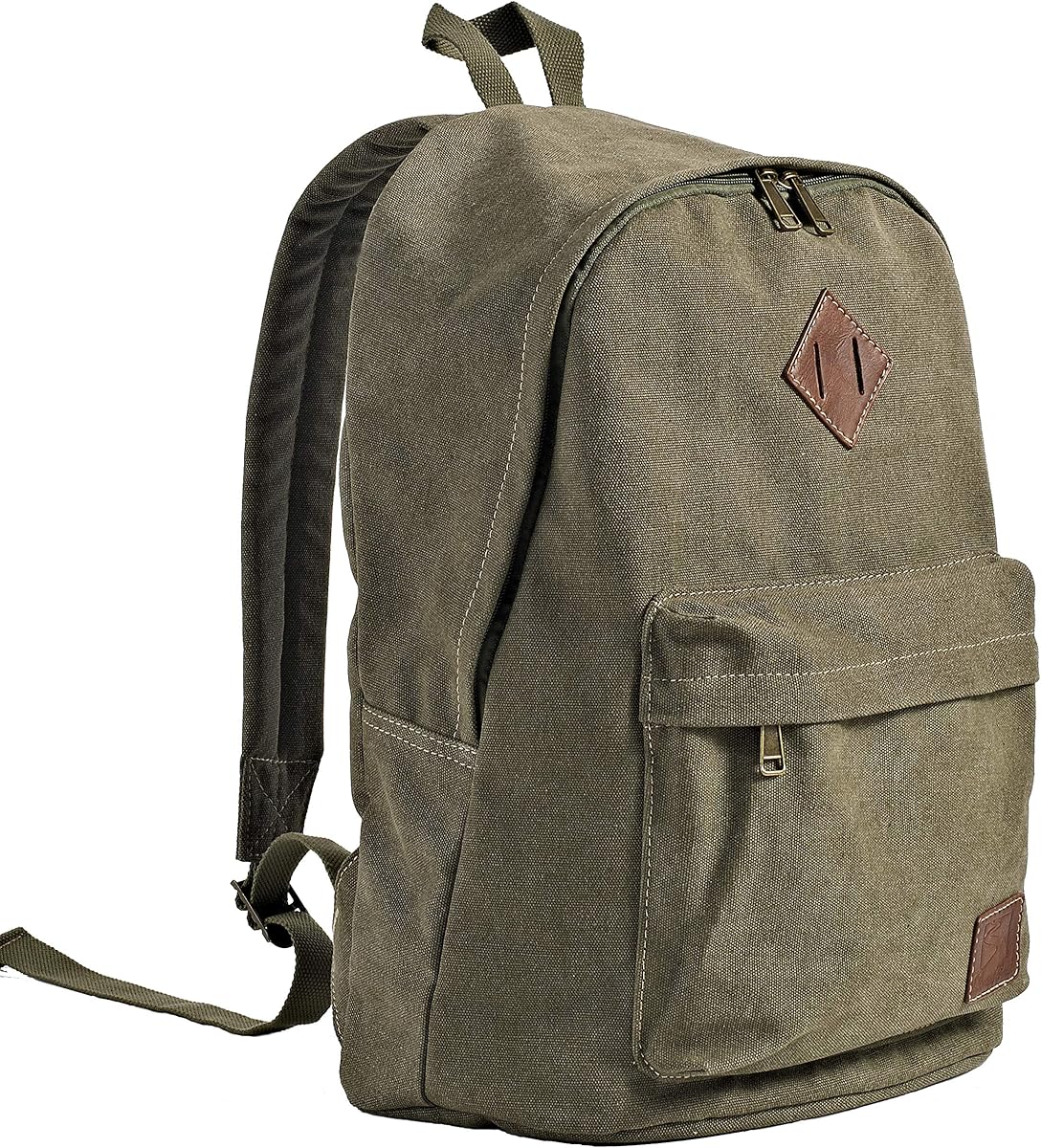
The same supply-chain ethos, different silhouette. Terra Thread’s Canvas Backpack uses the same GOTS-cotton supply chain and same B Corp factory, but swaps the padded laptop sleeve for a lighter, roll-top design. At 0.9 lb, it’s a better day-hike or farmers’ market companion. Climate Neutral certification means the brand offsets every emission from farming to shipping. The 4.8 rating holds steady—users praise the brass hardware and the fact that the entire pack is sewn with organic thread, reducing microplastic shedding at the seams.
- ✅ Climate Neutral certified — full offset of factory emissions
- ♻️ Organic cotton thread (no synthetic polyester thread)
- 💰 More affordable than the Terra at a lower price tier
- ⚠️ No laptop sleeve; roll-top limits access speed
- ⚠️ Brass hardware tarnishes if not dried properly
👜 Ewa Organic Cotton Tote — O My Bag

The tote that proves local sourcing scales. O My Bag’s Ewa Tote is made from heavyweight GOTS organic cotton, dyed with low-impact dyes, and assembled in a B Corp-certified factory in northern India. The raw cotton comes from the same region, keeping the journey under 1,000 miles. The tote features an inner zip pocket, reinforced handles, and a magnetic snap closure. PETA Approved vegan certification means no animal products anywhere in the supply chain. The 4.7 rating reflects minor complaints about the lack of a crossbody strap, but most users love the spacious interior and the fact that it stands upright when empty.
- ✅ PETA Approved Vegan — no animal glues, waxes, or dyes
- 💪 12-oz canvas holds up to 30 lb without tearing
- 🌱 B Corp + GOTS + Fair Trade triple certification
- ⚠️ No crossbody strap; hand-carry or elbow-crook only
- ⚠️ Heavy for a tote (0.8 lb empty)
⭐ Etta Star Necklace — Starfish Project

The jewelry piece with a mission that starts at the workbench. Starfish Project employs women escaping human trafficking in a B Corp-certified workshop outside Shanghai. The Etta Star Necklace is made from recycled brass, plated with nickel-free silver, and assembled entirely within the workshop. The supply chain is tight: metal is sourced from a Chinese recycling facility within 200 miles, then cast and finished on-site. The 4.9 rating is driven by customer love for the adjustable chain (16–18 in.) and the star’s subtle hammered texture. Every purchase also funds vocational training for the artisans.
- ✅ Empowerment-driven: 100 % of profit supports trafficking survivors
- 🔒 Secure lobster clasp tested to 5,000 open/close cycles
- 💧 Hypoallergenic; no nickel, lead, or cadmium
- ⚠️ Brass core may cause green patina on sensitive skin
- ⚠️ Limited stock due to small workshop capacity
💡 Pro Tip: How to Verify a Brand’s “Local” Claim
Don’t just scan the “About Us” page. Ask customer support for the factory’s city and country. Cross-check against the brand’s B Corp profile (if available) or GOTS certificate. If they hedge or say “our supply chain is confidential,” it’s probably not local.
How to Choose Your Local-Sourcing Jewelry & Accessory
- 📍 Trace the raw materials — cotton/leather/metal origin matters more than assembly. A “made in USA” bag with Chinese cotton still has a long supply chain.
- 🔋 Check for triple certs — GOTS or B Corp alone is good; GOTS + Fair Trade + Climate Neutral is a supply-chain guarantee.
- 📦 Audit the packaging — do they ship in a polybag? If yes, ask if it’s recycled or compostable.
- 🛠️ Look for a repair program — the most local-savvy brands offer in-house repairs; it keeps your gear in the local economy longer.
- 💰 Calculate cost per wear — a $200 bracelet worn 300 times costs $0.67 per wear. Local sourcing often costs more upfront but lasts longer.
Frequently Asked Questions
What does “local sourcing” actually mean for jewelry and accessories?
For this roundup, “local” means the entire production chain (raw material extraction, manufacturing, assembly, packaging) takes place within a single country or contiguous continent. No intercontinental shipping of unfinished goods.
Are these products more expensive than conventional alternatives?
Generally, yes. Local labor, Fair Trade premiums, and small-batch production add 20–50 % to the price. But the cost per wear is often lower because the quality is higher and repairs are cheaper.
How do I know a brand’s “made in USA” or “made locally” claim is true?
Look for live certifications (B Corp, GOTS, Fair Trade) that require annual audits. Check the certification numbers on the cert body’s public database. If they resist sharing, treat the claim skeptically.
Do any of these brands offer repair or take-back programs?
Yes. Terra Thread offers a lifetime repair guarantee on its backpacks. Starfish Project will replace a broken clasp for the cost of shipping. Article 22 does not offer repairs but uses 100 % recyclable materials.
Can I find locally sourced jewelry and accessories under $100?
The Everyday Bracelet by Article 22 is under $100. Most other picks in this roundup are in the $$–$$$ range. For under $50, try secondhand local artisan markets or Etsy filtered by country of production.
Final Verdict
In 2026, “local” is the new luxury. It doesn’t mean parochial—it means intentional. Every item in this roundup proves that you can dress yourself or accessorize your life without routing your purchase through a global supply chain that burn through jet fuel and exploits wage gaps. The Organic Cotton Beanie is the lowest-mileage champion; the Everyday Bracelet is the most story-rich; and both Terra Thread packs are the best value for daily utility. If you can afford the premium, you’re not just buying a product—you’re voting for a shorter, more human supply chain.
⚠️ A Note on “Local” Claims in 2026
Greenwashing hasn’t gone away. We flagged one popular “made in USA” brand that sources its leather from Argentina and its hardware from China—only the final assembly happens in the US. That’s not local. Use the checklist above to separate real commitment from marketing theater.