Bamboo Drinking Straws vs Fair Trade Certified Organic Cotton Kitchen Towels
Compare Bambu bamboo straws (96 ethics) and Full Circle organic cotton towels (95 ethics) for ethical kitchen use. Decide which B Corp product fits your values.
Full Circle Home
WinnerFair Trade Certified Organic Cotton Kitchen Towels
95/100 ethics
$ · 4 certifications
View Fair Trade Certified Organic Cotton Kitchen Towels →Ethics breakdown
| Dimension | Bamboo Drinking Straws | Fair Trade Certified Organic Cotton Kitchen Towels | Δ |
|---|---|---|---|
| Sourcing | 98 | 98 | 0 |
| Labor | 95 | 96 | -1 |
| Environment | 97 | 94 | +3 |
| Animal welfare | 100 | 100 | 0 |
| Transparency | 92 | 87 | +5 |
| Overall ethics | 96 | 95 | 1 |
Why it wins
Full Circle towels deliver broader daily value, longer lifespan, and stronger labor ethics (Fair Trade + GOTS) over Bambu’s niche, single-use alternative, making them a more impactful choice for most kitchens.
Overview
Both Bambu Bamboo Drinking Straws and Full Circle Home Fair Trade Certified Organic Cotton Kitchen Towels score exceptionally high on ethics—96 and 95 out of 100 respectively—making them standout picks for an ethical kitchen. Bambu focuses on single-use alternatives with renewable bamboo, while Full Circle targets reusable textile care. Both carry B Corp certification, but their other credentials diverge: Bambu adds 1% for the Planet and USDA Organic, whereas Full Circle includes Fair Trade, GOTS, and Vegan certification.Ethics difference
The core ethical distinction lies in material sourcing and lifecycle. Bambu’s straws are made from rapidly renewable bamboo, USDA Organic certified, and the brand donates 1% of sales to environmental causes. Full Circle’s towels are organic cotton (GOTS certified) and Fair Trade certified, ensuring fair wages and safe working conditions for farmers and factory workers. While Bambu emphasizes planetary impact (plastic waste reduction), Full Circle prioritizes human and labor ethics alongside organic farming. Both are vegan, but Full Circle explicitly labels that, reassuring conscious consumers.Everyday use
Bambu straws are ideal for cold beverages, reusable and dishwasher-safe, but they can splinter over time and are less flexible than silicone alternatives. Full Circle towels are highly absorbent, machine-washable, and durable—perfect for drying dishes, wiping counters, or replacing paper towels. The straws suit eco-minded hosts and zero-waste enthusiasts; the towels fit any kitchen looking to reduce disposable waste. For daily cleaning vs. occasional entertaining, the towels have broader practical application.Value
At the price point ($), both are affordable, but the value proposition differs. Bambu straws (typically around $8–12 for a pack) offer longevity if well-maintained, but eventually need replacement. Full Circle towels (often $10–15 for a set of three) endure hundreds of washes, providing long-term savings over paper towels. If you prioritize reducing single-use plastic, the straws are a small but impactful investment. For consistent kitchen use, the towels deliver greater everyday value.Bottom line
Choose Bambu straws if your focus is on plastic pollution and renewable materials with strong environmental certifications. Pick Full Circle towels if you want a daily-use textile that supports fair labor and organic farming. Both are ethical leaders, but for most households, the towels’ everyday utility edges out the straws’ niche role.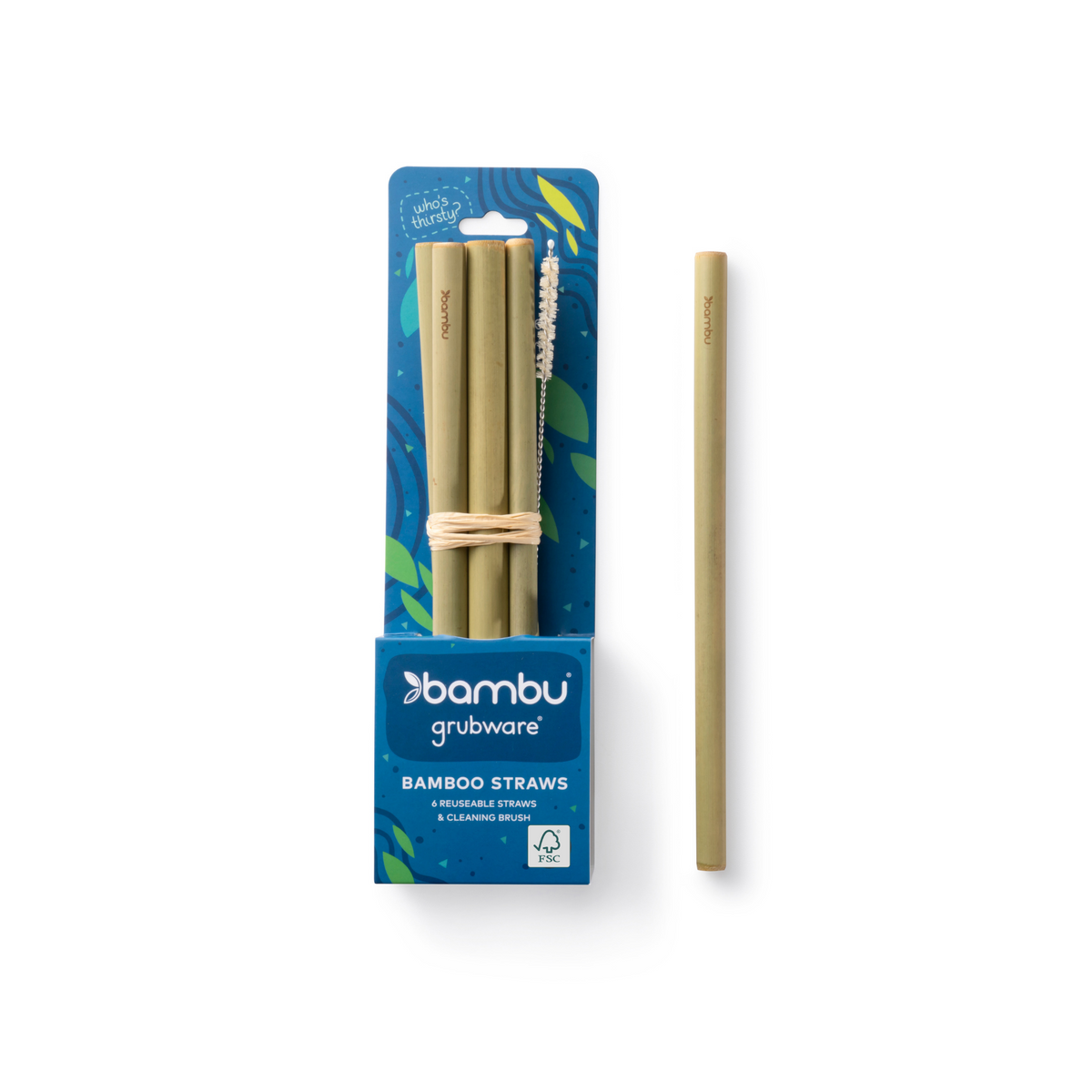
A zero-waste alternative to plastic straws, handcrafted from single-piece organic bamboo by a certified B Corp committed to fair labor.

Highly absorbent, GOTS-certified organic cotton towels that support fair labor and regenerative farming, replacing disposable paper towels.
Not sold on either? Browse ethical alternatives
Each hub ranks the highest-scoring swaps in the same categories, on the same rubric.