Decomposition Book - College Ruled vs Onyx and Green Recycled Newspaper Pencils
Compare Michael Roger Decomposition Book (92) vs Onyx and Green Pencils (92) for eco-friendly office use. FSC, PETA, 1% for Planet vs GRS certs. Which wins?
Michael Roger
WinnerDecomposition Book - College Ruled
92/100 ethics
$ · 3 certifications
View Decomposition Book - College Ruled →Onyx and Green
Onyx and Green Recycled Newspaper Pencils
92/100 ethics
$ · 3 certifications
View Onyx and Green Recycled Newspaper Pencils →Ethics breakdown
| Dimension | Decomposition Book - College Ruled | Onyx and Green Recycled Newspaper Pencils | Δ |
|---|---|---|---|
| Sourcing | 95 | 98 | -3 |
| Labor | 88 | 75 | +13 |
| Environment | 98 | 95 | +3 |
| Animal welfare | 90 | 98 | -8 |
| Transparency | 85 | 82 | +3 |
| Overall ethics | 92 | 92 | 0 |
Why it wins
The Michael Roger Decomposition Book ties the pencils in ethics (92/100) but offers direct environmental impact through 1% for the Planet, longer-lasting value, and practical daily use for most stationary needs.
Overview
Both products earn an impressive ethics score of 92 out of 100, making them top-tier choices for conscientious shoppers. The Michael Roger Decomposition Book - College Ruled is a durable notebook made from recycled materials, certified by FSC, PETA Approved, and part of 1% for the Planet. The Onyx and Green Recycled Newspaper Pencils are writing instruments crafted from reclaimed newspaper, carrying PETA Approved, FSC Certified, and Global Recycled Standard certifications. Both are priced affordably with a single dollar sign, but they serve different daily needs.Ethics diff
While both share FSC and PETA certifications, the key ethical differentiator is their additional credentials. The Decomposition Book supports environmental nonprofits through 1% for the Planet, channeling profits directly to sustainability causes. The pencils carry the Global Recycled Standard, ensuring rigorous third-party verification of recycled content throughout the supply chain. Both are equally strong, but the Decomposition Book offers a more direct charitable contribution, while the pencils emphasize material traceability.Everyday use
For note-taking, journaling, or classroom use, the Decomposition Book excels with college-ruled lined pages and a sturdy cover. Its design is practical for extended writing sessions. The pencils are ideal for quick notes, sketching, or exam usage, but they are consumable and will need regular replacement. If your workflow is primarily writing, the notebook is more versatile; for short-term or creative tasks, the pencils shine.Value
Both are budget-friendly. The notebook provides reusable surface area over hundreds of pages, offering long-term value. The pencils are sold in packs, making them cost-effective for schools or bulk use, but their lifespan is limited. For sustained use, the notebook delivers better cost-per-use ratio.Bottom line
This is a close tie. The winner depends on your primary need: if you need a high-ethics notebook, choose the Decomposition Book; if you need eco-friendly pencils, choose Onyx and Green. For overall impact and versatility, the Decomposition Book edges ahead due to its charitable contribution and longer lifespan.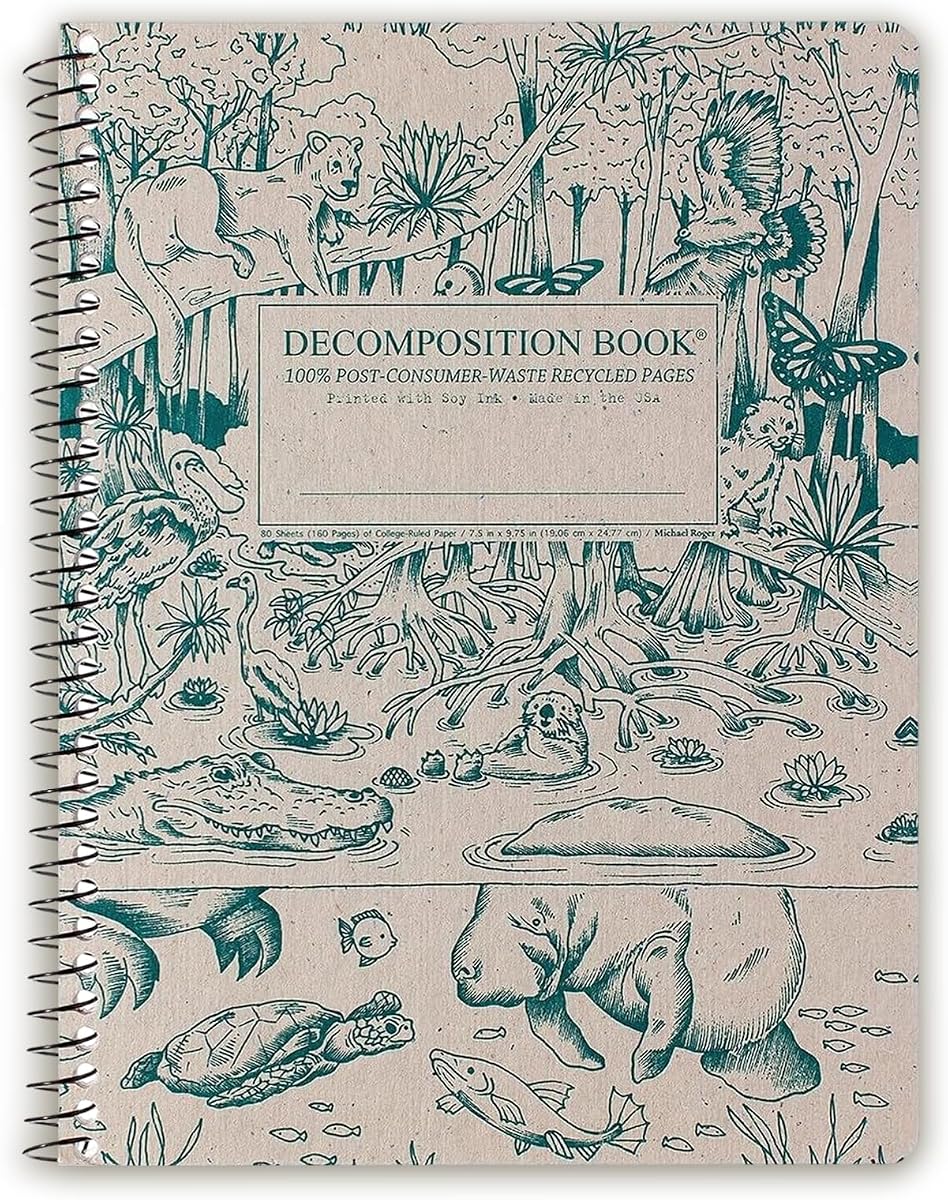
A staple for eco-conscious students and professionals, this notebook uses 100% post-consumer waste recycled paper and soy-based inks.

A unique alternative to cedar pencils, these are made from rolled recycled newspapers and feature HB #2 graphite.
Not sold on either? Browse ethical alternatives
Each hub ranks the highest-scoring swaps in the same categories, on the same rubric.