Dr. Bronner's Regenerative Organic Coconut Oil vs Regenerative Organic Chili Mango
Compare two top-rated ethical food products: Dr. Bronner's Regenerative Organic Coconut Oil vs Patagonia Provisions Regenerative Organic Chili Mango. See which wins on ethics, everyday use, and value.
Dr. Bronner's
Dr. Bronner's Regenerative Organic Coconut Oil
96/100 ethics
$$ · 5 certifications
View Dr. Bronner's Regenerative Organic Coconut Oil →Patagonia Provisions
Regenerative Organic Chili Mango
96/100 ethics
$$ · 4 certifications
View Regenerative Organic Chili Mango →Ethics breakdown
| Dimension | Dr. Bronner's Regenerative Organic Coconut Oil | Regenerative Organic Chili Mango | Δ |
|---|---|---|---|
| Sourcing | 98 | 98 | 0 |
| Labor | 97 | 95 | +2 |
| Environment | 95 | 97 | -2 |
| Animal welfare | 100 | 90 | +10 |
| Transparency | 95 | 100 | -5 |
| Overall ethics | 96 | 96 | 0 |
Why it wins
Both products achieve identical ethics scores (96/100) and price points, serve completely different culinary functions, and excel in distinct certification areas—making it impossible to declare a clear winner without a specific use case.
Overview
Both Dr. Bronner's Regenerative Organic Coconut Oil and Patagonia Provisions Regenerative Organic Chili Mango score an impressive 96/100 on ethics, making them standout choices for conscious shoppers. Dr. Bronner's offers a versatile, unflavored cooking oil that supports regenerative agriculture and fair trade, while Patagonia Provisions delivers a ready-to-eat snack combining organic mango with spicy chili seasoning. Both are priced in the $$ range, but they serve very different kitchen functions.Ethics diff
The ethical profiles are nearly identical, but with distinct emphases. Dr. Bronner's carries USDA Organic, Fair Trade, Regenerative Organic, Non-GMO, and Vegan certifications—highlighting equity for farmers and animal-free production. Patagonia Provisions also holds USDA Organic and Regenerative Organic certifications, plus B Corp status and 1% for the Planet membership, which reflects a broader corporate responsibility model. Both support soil health and carbon sequestration through regenerative farming, but Dr. Bronner's more directly addresses social justice via Fair Trade, while Patagonia focuses on environmental giving.Everyday use
Dr. Bronner's coconut oil is a true kitchen staple: great for sautéing, baking, smoothies, and even skin care. Its neutral flavor and high smoke point make it versatile for sweet or savory dishes. However, it comes in a jar and requires melting for some uses. Patagonia's Chili Mango is a ready-to-eat snack—perfect for on-the-go energy, hiking, or a quick sweet-and-spicy treat. It's shelf-stable and individually portioned (typically in a pouch), but less adaptable for cooking. Your choice depends on whether you need a multitasking ingredient (coconut oil) or a convenient snack (mango).Value
Both are fairly priced for their certifications and quality. Dr. Bronner's coconut oil (typically 14-16 oz) offers a lower cost per use since a little goes a long way, making it economical for regular cooking. Patagonia's Chili Mango is pricier per serving due to packaging and the dried fruit process, but reasonable for a premium organic snack. If you're maximizing value across many meals, the coconut oil wins. For a treat, the mango is well worth it.Bottom line
This is a functional tie—both are top-tier ethical products with identical scores and similar prices, but completely different use cases. Choose Dr. Bronner's if you want a versatile, Fair Trade cooking oil that reduces kitchen waste. Choose Patagonia if you need a portable, regenerative organic snack.
A gold standard in ethical food production, this virgin coconut oil is sourced from regenerative organic palms in Sri Lanka, ensuring soil health and fair wages.
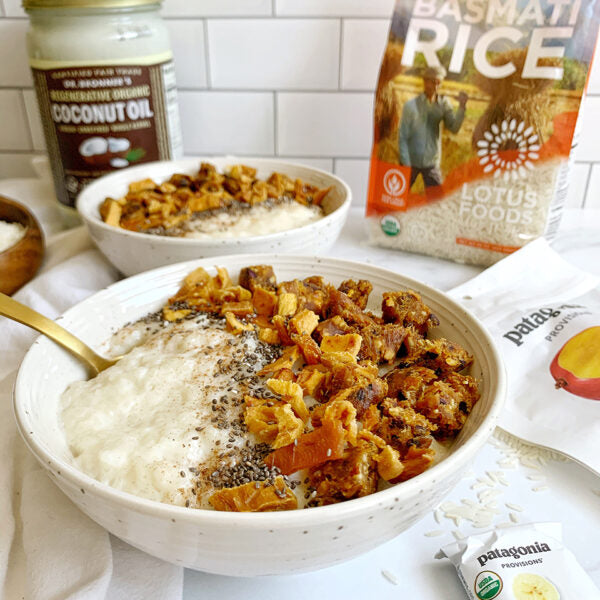
A pioneer in regenerative agriculture, Patagonia Provisions offers a snack that actively restores soil health while ensuring fair compensation for family farmers in Nicaragua.
Not sold on either? Browse ethical alternatives
Each hub ranks the highest-scoring swaps in the same categories, on the same rubric.