Organic Ethos Whole Bean Coffee vs Regenerative Organic Chili Mango
Compare Pachamama Coffee Organic Ethos Whole Bean Coffee and Patagonia Provisions Regenerative Organic Chili Mango. Both score 96/100, but which fits your ethical food needs?
Pachamama Coffee
Organic Ethos Whole Bean Coffee
96/100 ethics
$$ · 4 certifications
View Organic Ethos Whole Bean Coffee →Patagonia Provisions
Regenerative Organic Chili Mango
96/100 ethics
$$ · 4 certifications
View Regenerative Organic Chili Mango →Ethics breakdown
| Dimension | Organic Ethos Whole Bean Coffee | Regenerative Organic Chili Mango | Δ |
|---|---|---|---|
| Sourcing | 98 | 98 | 0 |
| Labor | 100 | 95 | +5 |
| Environment | 92 | 97 | -5 |
| Animal welfare | 85 | 90 | -5 |
| Transparency | 98 | 100 | -2 |
| Overall ethics | 96 | 96 | 0 |
Why it wins
Both products achieve the same ethics score (96/100) with complementary strengths—Pachamama excels in farmer ownership and coffee versatility, while Patagonia offers snack convenience and planetary giving. The choice depends on personal need, not ethical superiority.
Overview
Pachamama Coffee Organic Ethos Whole Bean Coffee and Patagonia Provisions Regenerative Organic Chili Mango are standout products on our ethical shopping site, both scoring a remarkable 96/100 for ethics. Each carries a mid-range price tag ($$) and boasts a suite of certifications. Pachamama offers a whole-bean coffee experience, while Patagonia delivers a snackable dried mango infused with chili. Both prioritize regenerative organic and Fair Trade principles, but they serve completely different culinary roles—one as a daily morning ritual, the other as a portable, spicy-sweet treat.Ethics diff
Despite identical ethics scores, their moral profiles differ subtly. Pachamama Coffee is certified USDA Organic, Fair Trade, B Corp, and Regenerative Organic. The Fair Trade certification ensures direct relationships with smallholder farmer cooperatives, supporting equitable wages. Patagonia Provisions holds B Corp, Regenerative Organic, USDA Organic, and 1% for the Planet certifications. Patagonia’s inclusion of 1% for the Planet means a portion of sales goes to environmental nonprofits, while Pachamama’s lack of this certification is offset by its deeper focus on farmer ownership (the company is 100% farmer-owned). Both companies are leaders in regenerative agriculture, which improves soil health and sequesters carbon.Everyday use
Pachamama Coffee is ideal for home brewing—pour-over, French press, or espresso. Its whole-bean form requires grinding, making it perfect for coffee enthusiasts who want fresh flavor. The flavor profile is likely smooth and rich, suited for mornings or midday breaks. Patagonia Chili Mango is a ready-to-eat snack, great for hiking, office desks, or lunchboxes. The sweet mango balanced by chili heat offers a savory-sweet kick. It requires no preparation and is shelf-stable, making it more convenient for on-the-go use. For frequency, coffee may be consumed daily, while the mango is more occasional.Value
Both are priced at $$, meaning they are affordable but not the cheapest in their categories. Pachamama Coffee typically costs around $15–$20 per 12 oz bag, which is standard for certified organic specialty coffee. Given its farmer-direct model and regenerative certification, you get ethical impact per cup. Patagonia Chili Mango is usually $6–$8 for a 4 oz pouch. While pricier than conventional dried mango, the investment supports regenerative farming and planetary giving. For value, Pachamama offers more servings per dollar if you drink coffee daily; Patagonia’s snack offers higher convenience but lower volume per cost.Bottom line
Both products are ethical leaders. Choose Pachamama Coffee if you want a daily brew with deep farmer-support roots and versatile brewing. Choose Patagonia Chili Mango if you need a portable, spicy-sweet snack that also supports environmental nonprofits via 1% for the Planet. Neither outshines the other ethically, so your decision depends on whether you need a beverage or a bite. This is a tie for different use cases.
A 100% farmer-owned coffee brand that bypasses traditional supply chain exploitation by returning all profits directly to the small-scale producers in Latin America and Africa.
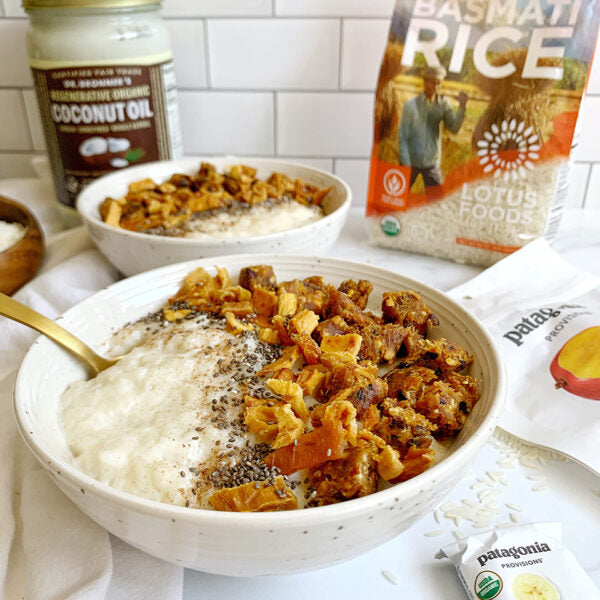
A pioneer in regenerative agriculture, Patagonia Provisions offers a snack that actively restores soil health while ensuring fair compensation for family farmers in Nicaragua.
Not sold on either? Browse ethical alternatives
Each hub ranks the highest-scoring swaps in the same categories, on the same rubric.