Vegan vs Cruelty-Free: What's the Difference?
Vegan and cruelty-free sound interchangeable but cover different things. Here's exactly what each guarantees and how to find products that are both.
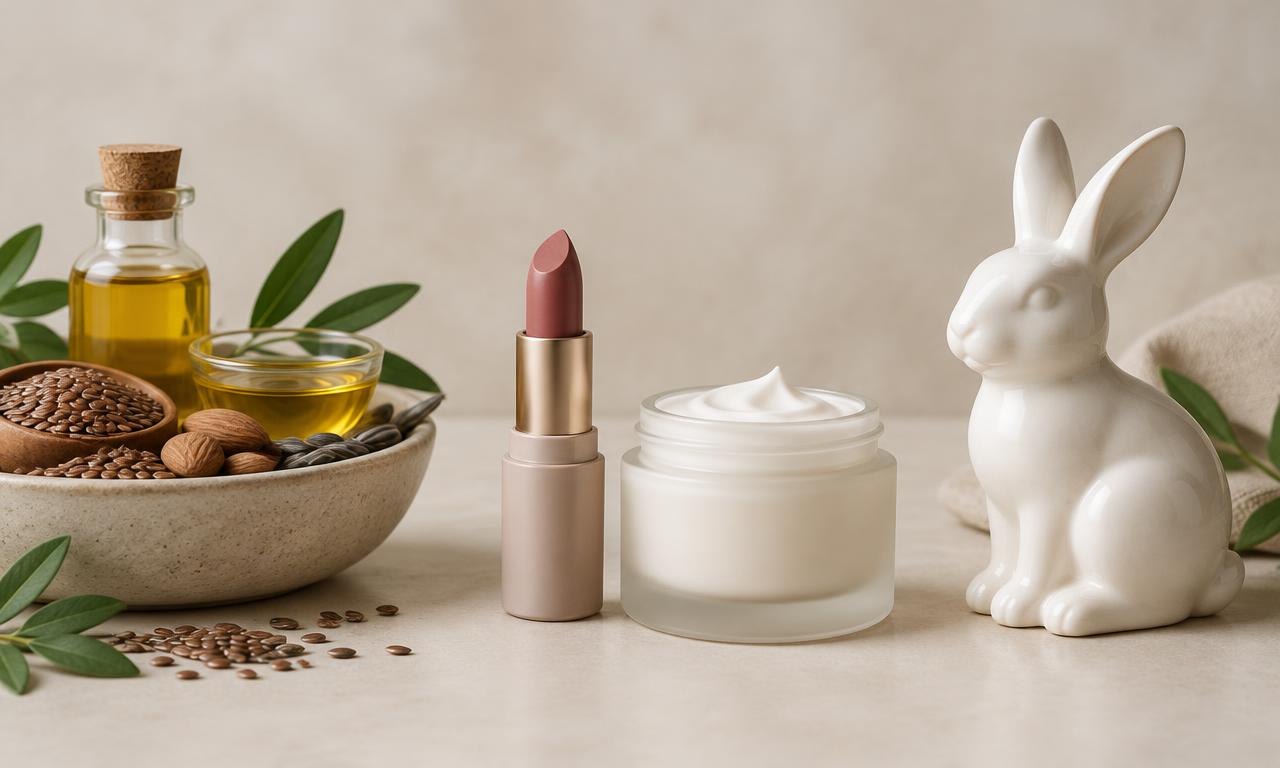
Key takeaways
- 1.Cruelty-free is about testing; vegan is about ingredients.
- 2.A product can be one without the other.
- 3.Leaping Bunny is the strictest cruelty-free standard.
- 4.Carmine, beeswax, lanolin and shellac are the common non-vegan surprises.
Two different claims
Cruelty-free = no animal testing of the finished product or its ingredients. Vegan = no animal-derived ingredients in the formula or supply chain.
A product can be one without the other. Many drugstore lipsticks are technically cruelty-free but contain beeswax or carmine. Many "vegan" beauty brands sold in markets that require animal testing are not cruelty-free.
Trusted certifications
For cruelty-free: Leaping Bunny is the strictest standard, with supplier audits and ongoing monitoring. PETA's Beauty Without Bunnies is broader.
For vegan: The Vegan Society trademark, Vegan Action's Certified Vegan logo and PETA's Vegan mark are the recognized standards.
Look for both seals together. EthiCompare's product pages list every verified certification per product so you can filter by either or both.
The China question
Historically, brands selling general cosmetics in mainland China had to allow post-market animal testing. Reforms since 2021 have created cruelty-free pathways for many general cosmetics, but special-use products (sunscreen, anti-acne, hair dyes, etc.) and imports still face testing in some cases. Always verify per-brand rather than assuming.
Turn a claim into a checkable answer
Keep product ingredients, brand policy and parent-company practices separate. One positive statement does not answer every ethical question.
- 01
Record the exact claim, product and date; identify whether it covers one ingredient, the product or the company.
- 02
Find the original standard or certification directory and check the holder, scope and validity.
- 03
Separate verified evidence, the brand’s own statements and information that remains unknown.
Missing public evidence means unknown, not automatically false. Ask the brand for the current certificate or policy before drawing a conclusion.
Frequently asked questions
Is 'not tested on animals' the same as certified cruelty-free?+
No. The phrase is unregulated and may refer only to the finished product, not ingredients or suppliers. Certification covers the whole chain.
Which ingredients most often break a vegan claim?+
Carmine in red pigments, beeswax in balms, lanolin in creams, shellac in nail products and some collagen and keratin derivatives.