Is Bambu sustainable?
Broadly yes — Bambu averages 93/100 on EthiCompare, and its packaging, sourcing and certification record hold up better than most brands we track. Its stated commitments, per the brand profile we hold: Renewable materials, organic farming, minimal packaging, 1% for the Planet membership, and end-of-life compostability.
We read sustainability as verifiable practice, not marketing: third-party certification, packaging design, sourcing disclosure and published, dated targets. Claims without evidence score as unverified.
The evidence behind the answer
Cruelty-freeverified
No animal testing; products are not tested on animals at any stage.
Third-party certifiedverified
We record 4 distinct certifications across this brand's products.
Scored with our public methodology.
What Bambu's products show
Of the 4 Bambu products we score, 4 hold at least one sustainability or labour certification on file, and ethics scores range from 88 to 96/100.
| Product | Organic | Fair labour | Recyclable / compostable | Plastic-free packaging | Relevant certifications | Score |
|---|---|---|---|---|---|---|
| Bamboo Drinking Straws | Yes | Unverified | Yes | Yes | B Corp, 1% for the Planet, USDA Organic | 96 |
| Bamboo Dinnerware Set | Yes | Yes | Yes | Yes | B Corp, USDA Organic, Fair Trade, 1% for the Planet | 94 |
| Eco-Friendly Bamboo Gardening Tools Set | Yes | Unverified | Unverified | Yes | B Corp, USDA Organic, 1% for the Planet | 94 |
| Bambu Garden Hand Trowel | Yes | Unverified | Yes | Yes | B Corp, USDA Organic, 1% for the Planet | 88 |
"Yes" means a matching certification, label or material note is recorded for that product; "Unverified" means we hold no evidence either way, not that the answer is no.
How to check this yourself
Sustainability claims are only as good as the evidence behind them. Before you buy:
- Prefer independent certifications with a public register (B Corp, Fair Trade, FSC, GOTS, USDA Organic) over self-declared badges.
- Check whether the claim covers the whole product or one ingredient, and whether packaging is genuinely recyclable where you live.
- Look for dated, measurable targets and progress reports rather than open-ended pledges.
More on Bambu
Better-scoring alternatives to Bambu

A revolutionary compostable alternative to styrofoam coolers, made from hemp hurdles and mushroom mycelium. Perfect for sustainable camping and outdoor events.
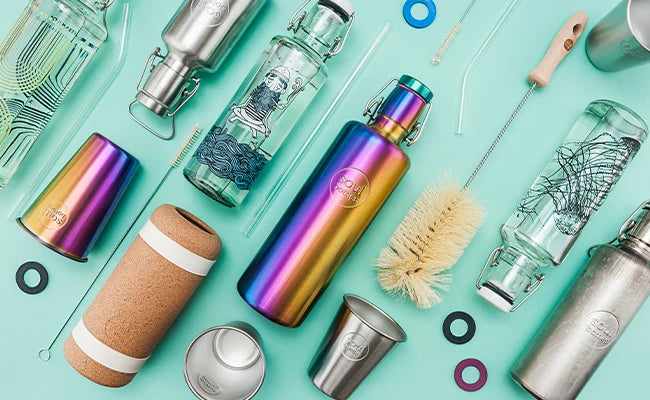
A 100% plastic-free, carbon-neutral glass bottle made in Germany, featuring stunning artist-designed motifs and a swing-top closure.

Exquisite, handcrafted serving utensils made by artisans in Kenya. Each set supports fair wages and preserves traditional woodworking techniques using sustainably harvested olive wood.

A luxurious, carbon-neutral flax linen throw that serves as a durable camping blanket or a high-end picnic base for outdoor wedding celebrations.

Exquisite hand-woven table linens designed by a Brooklyn-based Ethiopian-American designer and crafted by artisans in Ethiopia using GOTS-certified organic cotton.

A 100% organic and handcrafted fertilizer enriched with soil microbes and mycorrhizae, formulated without synthetic chemicals or 'factory farm' byproducts.
Bambu: frequently asked
Is Bambu sustainable?+
Broadly yes — Bambu averages 93/100 on EthiCompare, and its packaging, sourcing and certification record hold up better than most brands we track. Its stated commitments, per the brand profile we hold: Renewable materials, organic farming, minimal packaging, 1% for the Planet membership, and end-of-life compostability. Of the 4 Bambu products we score, 4 hold at least one sustainability or labour certification on file, and ethics scores range from 88 to 96/100.
Bambu: Cruelty-free?+
No animal testing; products are not tested on animals at any stage.
Bambu: Vegan options?+
All products are 100% vegan and free of animal-derived materials.
Bambu: Third-party certified?+
We record 4 distinct certifications across this brand's products.
What is Bambu's ethics score?+
Bambu averages 93/100 across 4 products we score on certifications, sourcing, labour, packaging and transparency.