Is Centrum ethical and cruelty-free?
Not really — Centrum fails 2 of the 4 ethics signals we track, including its animal-testing position, and holds no third-party certification we can verify.
Centrum, a Pfizer legacy brand owned by Haleon, is a globally recognized multivitamin line focused on scientific formulation and accessibility. While it maintains rigorous quality standards and has no major controversies, its ethical profile is mixed due to limited sustainability transparency, a non-vegan product range, and inconsistent animal-testing practices depending on market.
The evidence, signal by signal
Cruelty-freeflagged
Animal testing is conducted only where required by law, including for products sold in China.
Vegan optionsunverified
Limited; only a few formulations are vegan-certified, most contain animal-derived ingredients.
Sells in mainland Chinaflagged
Selling through mainland Chinese retail has historically triggered post-market animal testing.
Third-party certifiedunverified
We don't track any of this brand's products yet, so product-level certifications are unchecked.
Public pledges: Haleon has committed to net-zero emissions by 2040 and reducing plastic packaging, but Centrum-specific targets are minimal.
Scored with our public methodology. Profile last updated 2026-10-07.
How we reached this verdict on Centrum
Each signal is built from the product records and certifications we hold for Centrum, its brand profile and the sources that profile lists. Scores are AI-assisted catalogue assessments, not audits, so check the named certificate or policy before relying on it. Where a claim cannot be confirmed from those records, the signal is marked unclear rather than assumed positive.
How to read this page
Four questions decide most ethical-shopping decisions about a brand like Centrum. Work through them in order.
- 1Testing: is there third-party cruelty-free certification, and does the brand sell in markets where animal testing can still be required?
- 2Ingredients and materials: vegan formulation is a separate question from cruelty-free, and a brand can be one without the other.
- 3Ownership: a certified brand inside a group that still tests, or that is linked to documented controversies, is a different decision than an independent one.
- 4Packaging and transparency: refills, recycled content and published supplier data are where most brands quietly lose points.
Research notes on Centrum
Compiled from the brand's own statements and the public sources listed below, last reviewed 2026-10-07. We don't stock Centrum products, so nothing here is checked against product records.
Overview
Centrum is one of the world's most widely consumed multivitamin brands, originally launched in 1977 by Pfizer. In 2022, it became part of Haleon, a consumer health spin-off from GSK. Branded as 'the complete multivitamin,' Centrum is available in over 60 countries and offers formulations for different age groups and health needs. Haleon operates under a stated purpose of 'delivering better everyday health with humanity,' but the brand's ethical standing is shaped by its mass-market approach and the practices of its parent company.
Certifications
Centrum products are not certified organic, non-GMO, or Fair Trade. Some products bear the 'USP Verified' mark, indicating that the ingredients, potency, and manufacturing processes meet U.S. Pharmacopeia quality standards. A limited number of Centrum products in select markets (e.g., Australia) carry the 'Vegan' certification from the Vegan Society, but this is not uniform across the full range. Haleon reports third-party audits for manufacturing sites under ISO 9001 and other industry standards, but no comprehensive ethical certifications are applied to the brand overall.
Animal testing & vegan range
Centrum is not certified as cruelty-free by any major organization (e.g., Leaping Bunny, PETA). Haleon states that it conducts animal testing only when required by law, particularly for sales in China, where regulatory animal testing is mandated for imported supplements. This means Centrum products sold in China have undergone animal testing, while those in markets without such requirements may not have. The brand offers a few vegan-friendly formulations (e.g., some Centrum Silver products) but most contain gelatin or other animal-derived ingredients. There is no dedicated vegan product line.
Sustainability pledges
Haleon has set public sustainability targets, including achieving net-zero emissions by 2040 and reducing plastic use. As part of this, Centrum has introduced some packaging improvements, such as switching to recycled materials for select bottles. However, the brand still uses significant plastic and blister packaging, and there is no widely reported product-level carbon footprint data. Haleon's 2023 Sustainability Report details progress on water stewardship and waste reduction, but Centrum-specific commitments remain vague. Critics note that the parent company's overall environmental impact score from CDP is average (B rating).
Sourcing & labor
Centrum vitamins are manufactured in Haleon facilities in multiple countries, including the USA, UK, and Singapore. The parent company publishes a Supplier Code of Conduct requiring compliance with labor laws, anti-corruption, and workplace safety standards. Haleon conducts regular audits of high-risk suppliers, but there have been no major scandals reported specifically for Centrum’s supply chain. The brand sources raw materials from global suppliers, and while Haleon states a commitment to ethical sourcing, there is no independent certification (e.g., Fair Trade) for ingredients like minerals or herbal extracts.
Controversies context
Centrum has no major ongoing controversies. Historical concerns include lawsuits over patent disputes and marketing claims, but no issues related to worker exploitation, corruption, or environmental damage have emerged. A 2020 class action over alleged mislabeling of a product's vitamin content was dismissed, and Haleon has since updated its labeling. Compared to other supplement brands, Centrum’s reputation is stable, though its human and animal welfare practices are not industry-leading.
Bottom line
Centrum is a reliable, science-backed multivitamin option for consumers who prioritize quality and accessibility over ethical perfection. Its lack of cruelty-free certification, limited vegan range, and China-related animal testing are significant drawbacks for ethically conscious shoppers. Sustainability improvements are underway but remain insufficient for the brand to be considered a ‘green’ choice. For those seeking fully ethical supplements, smaller brands with transparent, certified practices may be more suitable.
High-scoring health & wellness picks to compare
Top-scoring products from other brands in the category Centrum sells in. A starting point for comparison, not proof that each one beats Centrum.

A fluoride-free, 70% organic toothpaste that leads the industry in fair trade sourcing and activist corporate governance.

A hand-crafted, raw wellness balm produced by women’s cooperatives in Ghana, ideal for gluten-free skin nutrition and head-to-toe hydration.

A gold-standard adaptogenic supplement produced through regenerative agriculture and fair trade partnerships with small family farmers in India.

A premium, hypoallergenic lumbar support pillow made from 100% GOLS organic certified latex and GOTS organic cotton, ideal for posture correction during downsizing transitions.

The gold standard for eco-friendly yoga mats, made from sustainably harvested natural rubber with a tree planted for every mat sold.
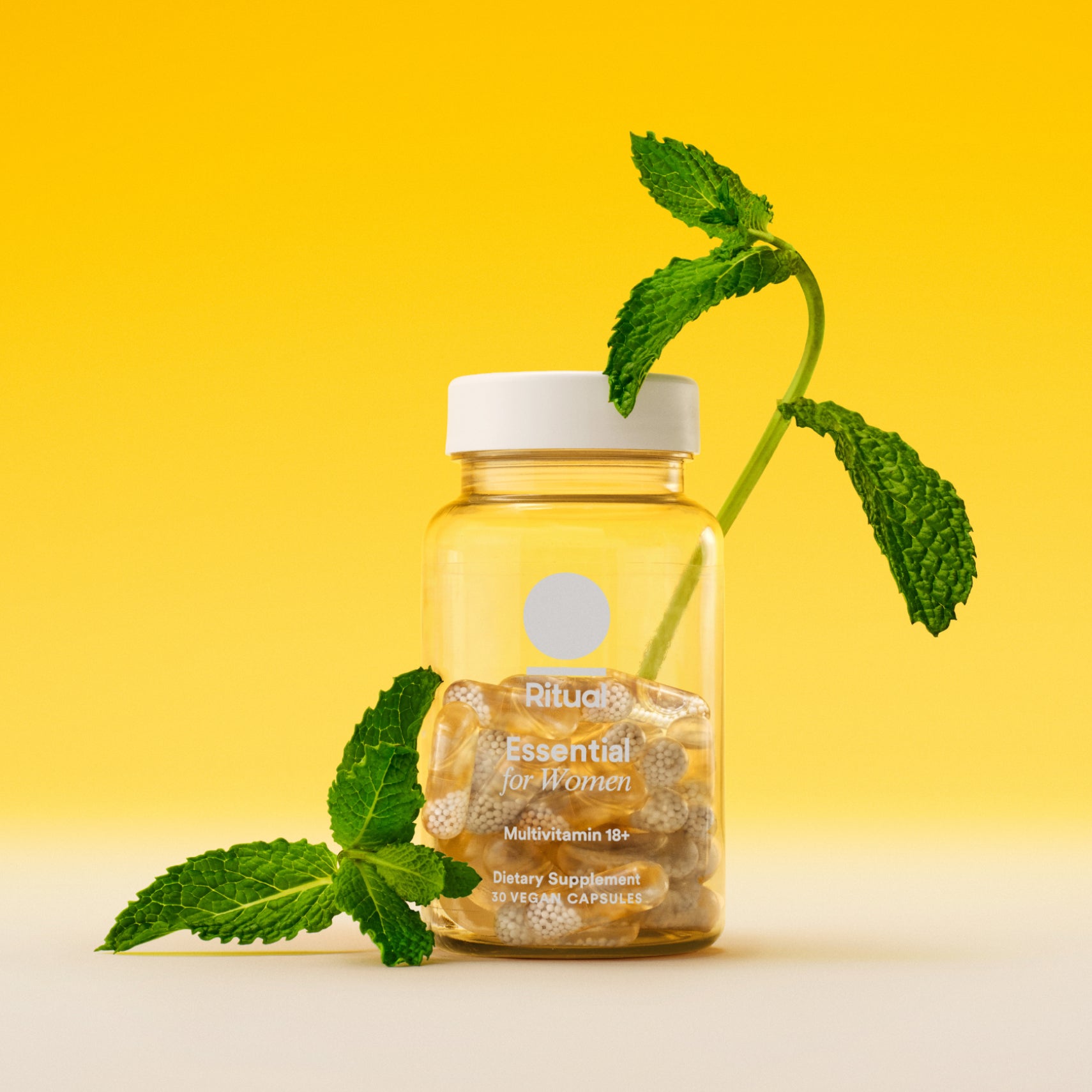
A transparently sourced, delayed-release multivitamin designed specifically for women, featuring a traceable supply chain and high-quality vegan ingredients.
More on Centrum
What the score looks at
Each 0–100 score is an AI-assisted catalogue assessment with five recorded dimensions, not a fixed-weight calculation or an audit. Brands cannot buy a position, and a missing disclosure limits what can be assessed rather than being assumed positive.
Animal welfare
Third-party cruelty-free and vegan certification, animal-derived inputs, testing policy in every market the brand sells in.
Materials & sourcing
Organic, recycled or regenerative inputs, traceability to farm or mill, deforestation and biodiversity risk.
Labour & human rights
Living-wage commitments, published supplier lists, audit results and remediation, Fair Trade certification.
Packaging & waste
Recycled content, plastic intensity, refill or take-back options, real end-of-life recyclability.
Transparency
Public reporting, verifiable claims, parent-company disclosure and how quickly the brand answers questions.
Reading the score
Leader
80–100
Multiple independent certifications, published supply chain, credible reductions.
Strong
65–79
Solid certified core with one weak pillar, usually packaging or labour disclosure.
Mixed
50–64
Real progress in places, significant gaps elsewhere — read the detail before buying.
Weak
0–49
Little verified evidence, or an ownership structure that contradicts the marketing.
Six checks for any ethical purchase
A ranking gets you to a shortlist; these checks tell you whether a specific product is right for your household. Work through them in order — the first two rule out most greenwashing on their own.
Buying checklist
- Check the certification, not the adjective: a logo from Leaping Bunny, Vegan Society, GOTS, Fair Trade or B Corp is auditable; the words "natural" and "clean" are not.
- Look up the parent company — a certified brand owned by a group that still tests where the law requires it is a different decision than an independent one.
- Read the full ingredient or material list, not the front-of-pack claim; a single animal-derived or high-impact input can undo the rest.
- Prefer refills, concentrates and take-back schemes: packaging is usually the fastest win in this category.
- Compare cost per use rather than shelf price, including dose, refill costs and how long you will actually use the item.
- Buy the thing you will actually finish or wear a hundred times; the lowest-impact purchase is still the one you do not replace.
Is Centrum ethical? FAQs
Is Centrum cruelty-free?+
Animal testing is conducted only where required by law, including for products sold in China.
Does Centrum have vegan products?+
Limited; only a few formulations are vegan-certified, most contain animal-derived ingredients.
Does Centrum sell in mainland China?+
Selling through mainland Chinese retail has historically triggered post-market animal testing.
What is Centrum's ethics score?+
We don't score any Centrum products yet, so there is no ethics score. The signals above come from the brand profile and the sources listed on this page.
What are the best alternatives to Centrum?+
High-scoring health & wellness products to compare include Dr. Bronner's All-One Toothpaste by Dr. Bronner's, Single Origin Shea Butter (Unrefined) by Baraka, Organic India Ashwagandha Capsules by Organic India.