Is Newman's Own ethical and cruelty-free?
Largely yes — we don't stock Newman's Own, but 1 of 4 ethics signals we track are verified in its favour, based on its published policies and third-party certifications.
Newman's Own is a mission-driven food and beverage brand that donates 100% of its after-tax profits to charity, with strong commitments to organic sourcing, no artificial ingredients, and no animal testing, though its parent company operates conventional food lines.
The evidence, signal by signal
Cruelty-freeunverified
Newman's Own does not test its products on animals, nor do its suppliers or third parties.
Vegan optionsunverified
Newman's Own offers a wide selection of vegan-friendly products, including salad dressings, pasta sauces, salsas, popcorn, and lemonade; dairy-containing items are clearly labeled.
Sells in mainland Chinaverified
The brand does not sell through channels that require mainland China post-market testing.
Third-party certifiedunverified
We don't track any of this brand's products yet, so product-level certifications are unchecked.
Public pledges: Newman's Own uses 100% recycled paperboard, aims to reduce GHG emissions by 30% by 2030, supports regenerative agriculture, and offsets remaining carbon emissions.
Scored with our public methodology. Profile last updated 2026-10-12.
How we reached this verdict on Newman's Own
Each signal is built from the product records and certifications we hold for Newman's Own, its brand profile and the sources that profile lists. Scores are AI-assisted catalogue assessments, not audits, so check the named certificate or policy before relying on it. Where a claim cannot be confirmed from those records, the signal is marked unclear rather than assumed positive.
How to read this page
Four questions decide most ethical-shopping decisions about a brand like Newman's Own. Work through them in order.
- 1Testing: is there third-party cruelty-free certification, and does the brand sell in markets where animal testing can still be required?
- 2Ingredients and materials: vegan formulation is a separate question from cruelty-free, and a brand can be one without the other.
- 3Ownership: a certified brand inside a group that still tests, or that is linked to documented controversies, is a different decision than an independent one.
- 4Packaging and transparency: refills, recycled content and published supplier data are where most brands quietly lose points.
Research notes on Newman's Own
Compiled from the brand's own statements and the public sources listed below, last reviewed 2026-10-12. We don't stock Newman's Own products, so nothing here is checked against product records.
Overview
Newman's Own was founded in 1982 by actor Paul Newman and author A.E. Hotchner. The brand is renowned for its unique philanthropic model: 100% of after-tax profits from all products—including salad dressings, pasta sauces, popcorn, salsa, and lemonade—are donated to charitable causes, primarily through the Newman's Own Foundation. As of 2024, the brand has donated over $600 million to thousands of nonprofit organizations worldwide. Newman's Own is currently owned by a holding company led by the Newman family, with no corporate parent that dilutes its ethical mission. The brand emphasizes natural ingredients, no artificial flavors or preservatives, and sustainable sourcing practices.
Certifications
Newman's Own holds several third-party certifications that support its ethical claims: USDA Organic (for many product lines), Non-GMO Project Verified (on select items), and Certified Gluten-Free (on specified products). The brand is also a certified B Corporation (since 2020), meeting rigorous standards of social and environmental performance, accountability, and transparency. It participates in the 1% for the Planet program, though its philanthropic model already exceeds that pledge. Products are produced in facilities that adhere to GFSI (Global Food Safety Initiative) standards, ensuring food safety and ethical production.
Animal testing & vegan range
Newman's Own has a clear policy against animal testing. The brand states that it does not test its products on animals, and neither do its suppliers or third parties on its behalf. All products are food items (not cosmetics or personal care), so animal testing is not industry-standard in this category; nevertheless, the brand explicitly affirms its non-testing stance. Newman's Own offers a broad range of vegan-friendly products, including many salad dressings, pasta sauces, salsas, popcorn, and lemonade. The brand labels allergens and dietary preferences clearly on packaging, and its website provides a filter for vegan products. Some items, like the Alfredo sauce or certain cheese-flavored popcorn, contain dairy, so not all products are vegan.
Sustainability pledges
Newman's Own has committed to reducing its environmental footprint through several initiatives. The brand uses 100% recycled paperboard for its boxes and is working toward recyclable or compostable packaging across all product lines. It has pledged to reduce greenhouse gas emissions by 30% by 2030 (from a 2019 baseline) and is a member of the Climate Collaborative, focusing on renewable energy and supply chain efficiency. The company has eliminated synthetic pesticides and fertilizers from its organic products, supports regenerative agriculture practices for ingredients like tomatoes and corn, and uses water-efficient irrigation in partner farms. Newman's Own also offsets its remaining carbon footprint through verified carbon credits.
Sourcing & labor
Newman's Own sources ingredients from global suppliers, with a strong preference for US-based farms when possible. The brand's organic tomatoes are largely sourced from California, and its corn for popcorn comes from the Midwest. While the company does not publicly publish a full list of supplier audits, it is a B Corporation and undergoes rigorous third-party assessments for labor practices, including fair wages, safe working conditions, and no child labor. The Newman's Own Foundation also funds programs that support farmer livelihoods and community development. However, the brand does not hold a specific Fair Trade certification for all products; some ingredients may be fair trade certified, but the label is not prominent across the range.
Controversies context
Newman's Own has no major controversies on record. There have been no significant lawsuits, boycotts, or public scandals linked to the brand. Minor criticisms include the brand's use of plastic lids on glass jars (though recyclable) and its parent company's investment in non-organic conventional foods (which are owned separately). The Newman's Own Foundation has been praised for transparency, publishing annual impact reports and maintaining a low CEO-to-worker pay ratio. Overall, the brand is widely regarded as one of the most ethically consistent and trustworthy in the food industry.
Bottom line
Newman's Own stands out as a highly ethical brand due to its unique profit-donation model, strong third-party certifications (B Corp, USDA Organic, Non-GMO), no animal testing, and genuine sustainability commitments. While it is not a fully plant-based brand and some packaging still uses mixed materials, its overall ethical profile is excellent. For consumers prioritizing charity, organic ingredients, and corporate responsibility, Newman's Own is a top choice in the food and beverage category.
High-scoring food & nutrition picks to compare
Top-scoring products from other brands in the category Newman's Own sells in. A starting point for comparison, not proof that each one beats Newman's Own.

The gold standard for ethical food production, this coconut oil uses regenerative organic practices and fair trade labor to set a benchmark for corporate responsibility.
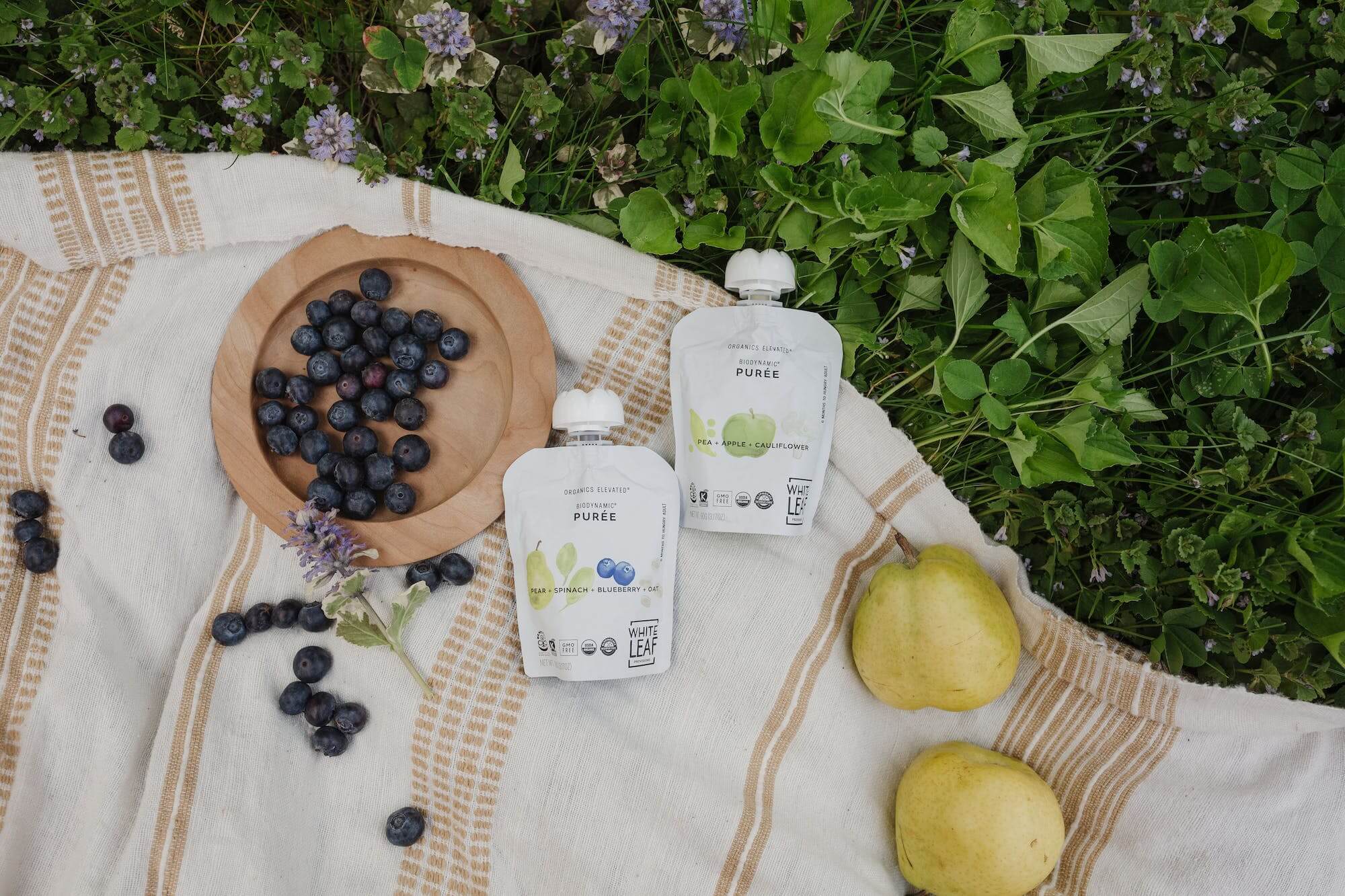
The gold standard in baby food, offering Demeter-certified biodynamic ingredients that exceed organic standards for soil health and purity.

Exquisite heirloom Malagasy cocoa produced entirely at the source in Madagascar. This professional-grade bulk trunk supports direct-trade and lemur habitat conservation.

A dairy-free, palm-oil-free alternative to mainstream hazelnut spreads, crafted in Italy with high-quality organic ingredients.

A nutrient-dense heirloom grain sourced through fully transparent supply chains that support regenerative farming practices in the Peruvian Andes.

A premium, traditionally churned A2 Ghee from the Bilona method, supporting regenerative farming and indigenous Indian cattle breeds.
More on Newman's Own
What the score looks at
Each 0–100 score is an AI-assisted catalogue assessment with five recorded dimensions, not a fixed-weight calculation or an audit. Brands cannot buy a position, and a missing disclosure limits what can be assessed rather than being assumed positive.
Animal welfare
Third-party cruelty-free and vegan certification, animal-derived inputs, testing policy in every market the brand sells in.
Materials & sourcing
Organic, recycled or regenerative inputs, traceability to farm or mill, deforestation and biodiversity risk.
Labour & human rights
Living-wage commitments, published supplier lists, audit results and remediation, Fair Trade certification.
Packaging & waste
Recycled content, plastic intensity, refill or take-back options, real end-of-life recyclability.
Transparency
Public reporting, verifiable claims, parent-company disclosure and how quickly the brand answers questions.
Reading the score
Leader
80–100
Multiple independent certifications, published supply chain, credible reductions.
Strong
65–79
Solid certified core with one weak pillar, usually packaging or labour disclosure.
Mixed
50–64
Real progress in places, significant gaps elsewhere — read the detail before buying.
Weak
0–49
Little verified evidence, or an ownership structure that contradicts the marketing.
Six checks for any ethical purchase
A ranking gets you to a shortlist; these checks tell you whether a specific product is right for your household. Work through them in order — the first two rule out most greenwashing on their own.
Buying checklist
- Check the certification, not the adjective: a logo from Leaping Bunny, Vegan Society, GOTS, Fair Trade or B Corp is auditable; the words "natural" and "clean" are not.
- Look up the parent company — a certified brand owned by a group that still tests where the law requires it is a different decision than an independent one.
- Read the full ingredient or material list, not the front-of-pack claim; a single animal-derived or high-impact input can undo the rest.
- Prefer refills, concentrates and take-back schemes: packaging is usually the fastest win in this category.
- Compare cost per use rather than shelf price, including dose, refill costs and how long you will actually use the item.
- Buy the thing you will actually finish or wear a hundred times; the lowest-impact purchase is still the one you do not replace.
Is Newman's Own ethical? FAQs
Is Newman's Own cruelty-free?+
Newman's Own does not test its products on animals, nor do its suppliers or third parties.
Does Newman's Own have vegan products?+
Newman's Own offers a wide selection of vegan-friendly products, including salad dressings, pasta sauces, salsas, popcorn, and lemonade; dairy-containing items are clearly labeled.
Does Newman's Own sell in mainland China?+
The brand does not sell through channels that require mainland China post-market testing.
What is Newman's Own's ethics score?+
We don't score any Newman's Own products yet, so there is no ethics score. The signals above come from the brand profile and the sources listed on this page.
What are the best alternatives to Newman's Own?+
High-scoring food & nutrition products to compare include Dr. Bronner’s Whole Kernel Virgin Coconut Oil by Dr. Bronner's, Biodynamic Veggie & Grain Pouch Variety Pack (24-Pack) by White Leaf Provisions, Luxury Single-Origin Dark Chocolate Professional Collection - 20kg Chef's Trunk by Beyond Good.