Seventh Generation is owned by Unilever
Since 2016, Seventh Generation operates under Unilever. Parent-company policies (animal testing, palm oil sourcing, lobbying) can affect the ethics profile even when the sub-brand markets itself as independent.
Is Seventh Generation ethical?
RecommendedYes — Seventh Generation scores 88/100 on EthiCompare, one of the stronger ratings in our database, with 2 of 3 ethics signals verified.
Seventh Generation is a pioneering eco-friendly household brand known for its high transparency, plant-based formulations, and rigorous third-party certifications. As a Certified B Corp, the company maintains high standards for environmental performance while leading the industry in post-consumer recycled packaging and advocacy for ingredient disclosure.
| Check | Status | Evidence |
|---|---|---|
| Cruelty-free | verified | Leaping Bunny certified; no animal testing conducted by the company or ingredient suppliers. |
| Vegan options | unverified | Almost entirely vegan; all dish soaps are 100% plant-based and cruelty-free. |
| Third-party certified | verified | We record 4 distinct certifications across this brand's products. |
| Certifications | on file | B Corp, Leaping Bunny, EWG Verified, EPA Safer Choice |
Scored with our public methodology. Profile last updated 2026-10-26.
Seventh Generation at a glance
Seventh Generation offers 1 product on EthiCompare across Home & Cleaning, with an average ethics score of 88/10 and recurring certifications including B Corp, Leaping Bunny, EWG Verified.
Is Seventh Generation ethical and cruelty-free? Read the verdict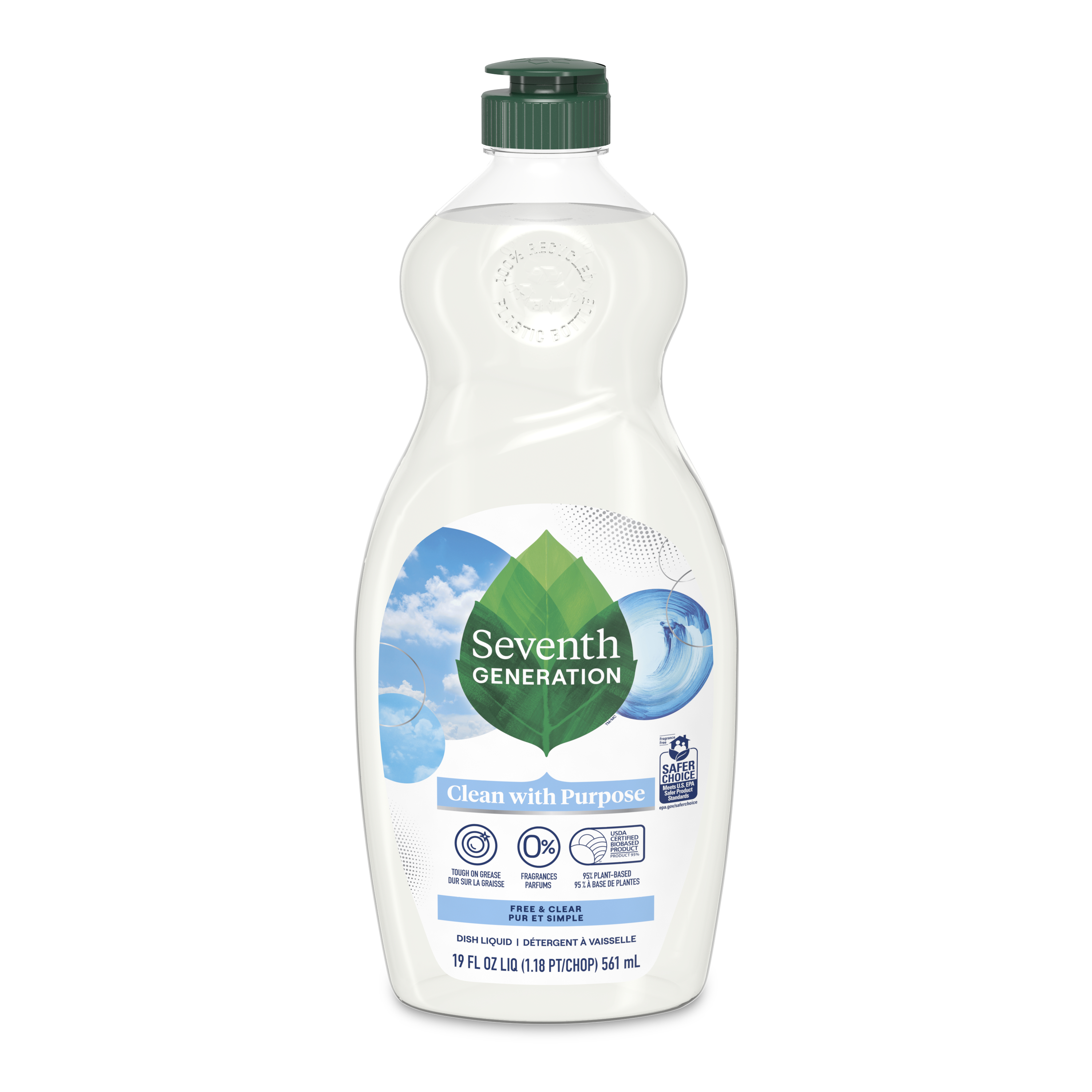
Our editorial read on Seventh Generation
Written from this brand's own listings, recorded certifications and ownership records in our database — never from generated or marketing copy. How we research brands
What our catalogue shows
We currently track 1 Seventh Generation product across Home & Cleaning. Each one is scored 0–100 on ethics using the certifications, ingredient and material disclosures, packaging claims and sourcing information attached to its listing.
Across the scored range, Seventh Generation averages 88/100, with individual products between 88 and 88. The average describes only the products we have scored — it is not a verdict on every product the company sells.
The highest-scoring Seventh Generation listing in our catalogue is Eco-Friendly Dish Soap - Free & Clear at 88/100, shown in the range table below with the rest of the line-up.
Certifications on file
The following credentials appear on Seventh Generation's listings or brand profile in our database: B Corp, Leaping Bunny, EWG Verified, EPA Safer Choice, FSC Certified, USDA BioPreferred. A certification is recorded when it appears on a product listing or the brand's published materials; we do not independently audit certificate scope, so confirm current status in the scheme's own directory before relying on it.
For animal-testing claims specifically, Leaping Bunny is the relevant credential in our records. Coverage can vary by product line and region, so treat it as a strong signal rather than a blanket guarantee for everything Seventh Generation sells.
Recorded policies
Our records describe Seventh Generation's animal-testing position as follows: "Leaping Bunny certified; no animal testing conducted by the company or ingredient suppliers."
Seventh Generation is recorded as not selling through mainland China retail channels, which avoids the post-market testing risk attached to that market.
On vegan suitability, our records note: "Almost entirely vegan; all dish soaps are 100% plant-based and cruelty-free."
Seventh Generation's stated sustainability commitments, as recorded in our database: "Aiming for 100% recyclable/compostable packaging and zero waste by 2030."
Policy statements above are the brand's own words as recorded in our database, shown so you can weigh them against the third-party credentials. Where a statement and a certification disagree, the certification is the stronger evidence.
Ownership
Seventh Generation is owned by Unilever (recorded since 2016). Parent-company practices — animal-testing policy, palm-oil sourcing, lobbying — can diverge from what the sub-brand markets, so we surface the group structure wherever we hold it.
Seventh Generation ethics profile
Updated 10/26/2026Overview
Founded in 1988 and headquartered in Burlington, Vermont, Seventh Generation has long been established as a leader in the sustainable household products market. The brand's name is derived from the Great Law of the Iroquois, which states that 'in our every deliberation, we must consider the impact of our decisions on the next seven generations.' This philosophy drives their product development, focusing on plant-based ingredients rather than petroleum-based synthetics. Their catalog spans laundry detergents, dish soaps, disinfectants, and baby products, all designed to minimize indoor air pollution and aquatic toxicity. In 2016, the company was acquired by Unilever, though it continues to operate as a mission-driven wholly-owned subsidiary with a focus on environmental advocacy and chemical policy reform.
Certifications
Seventh Generation holds some of the most rigorous third-party labels in the industry. As a Certified B Corp, they are legally required to consider the impact of their decisions on workers, customers, suppliers, community, and the environment. Their dish soaps and laundry products frequently carry the EPA Safer Choice label, indicating that every ingredient has been screened by the EPA for human health and environmental safety. For those with sensitivities, many of their products are EWG Verified, meaning they avoid the Environmental Working Group's 'ingredients of concern.' Additionally, the brand uses FSC Certified paper products and recycled plastic packaging to reduce their reliance on virgin materials.
Animal testing & vegan range
The brand maintains a firm stance against animal testing and is Leaping Bunny certified, which is the gold standard in cruelty-free labeling. This certification ensures that no new animal testing is performed at any stage of product development by the company or its ingredient suppliers. Furthermore, the vast majority of Seventh Generation products are vegan, containing no animal-derived ingredients. Their dish soaps, including the Free & Clear and Bio-Based varieties, are formulated entirely with plant-based surfactants, ensuring that no animal fats (common in traditional soaps) are utilized in the manufacturing process.
Sustainability pledges
Seventh Generation has set aggressive environmental targets under their '2030 Goals.' They aim for 100% of their packaging to be reusable, recyclable, or compostable. Currently, they lead the industry in the use of post-consumer recycled (PCR) plastic, with many bottles made from 100% recycled content. The brand is also working toward becoming 'Zero Waste' and significantly reducing their greenhouse gas emissions across their entire value chain. They have already transitioned a majority of their formulas to be bio-based, with many products reaching 95-97% USDA BioPreferred status, effectively decoupling their supply chain from the petroleum industry.
Sourcing & labor
The company emphasizes responsible sourcing, particularly concerning palm oil, a common ingredient in surfactants. Seventh Generation is a member of the Roundtable on Sustainable Palm Oil (RSPO) and works toward 100% traceable and sustainably sourced palm derivatives. As a B Corp, they undergo regular audits to ensure fair labor practices and worker safety within their supply chain. They also advocate for 'Right to Know' legislation, which requires cleaning product manufacturers to disclose all ingredients on their labels—a practice they have followed voluntarily for decades to ensure consumer safety and corporate accountability.
Controversies context
Seventh Generation has maintained a notably clean record regarding major environmental or labor scandals. The primary point of discussion for ethical consumers is often their 2016 acquisition by Unilever. While Unilever is a massive multinational corporation with a more complex ethical footprint, Seventh Generation has maintained its B Corp status and mission-driven independence since the acquisition. There have been no reported deviations from their strict non-animal testing policies or their commitment to non-toxic formulations under the parent company's ownership. The brand remains a 'Best for the World' honoree within the B Corp community.
Bottom line
For consumers seeking mass-market accessibility combined with high ethical standards, Seventh Generation remains a top-tier choice. Their Free & Clear Dish Soap (88/100) is an industry benchmark for safety and transparency, while their Bio-Based variants (79/100) offer a significant improvement over conventional petroleum-based cleaners. While their association with Unilever may be a deterrent for those avoiding large conglomerates, the brand's individual performance in ingredient safety, packaging innovation, and climate advocacy is exemplary.
Certifications
Sustainability pledges
Aiming for 100% recyclable/compostable packaging and zero waste by 2030.
Animal testing policy
Leaping Bunny certified; no animal testing conducted by the company or ingredient suppliers.
Vegan range
Almost entirely vegan; all dish soaps are 100% plant-based and cruelty-free.
Sold in mainland China
No — avoids mainland China retail channels.
Standards & certifications
Verified credentials appearing across Seventh Generation's product range.
Ethics breakdown
Average scores across our scoring pillars.
- Transparency98/10
- Animal Welfare95/10
- Environment92/10
- Labor90/10
- Sourcing85/10
Categories covered
Where Seventh Generation shows up across our directory.
- Home & Cleaning1
What reviewers highlight
Strengths mentioned most often across Seventh Generation's products.
- ✓Truly fragrance-free and non-irritating
- ✓Bottle is 100% recycled plastic
- ✓Cuts through tough grease effectively
- ✓Affordable and widely available
Brand ethics profile
Seventh Generation is a pioneering eco-friendly household brand known for its high transparency, plant-based formulations, and rigorous third-party certifications. As a Certified B Corp, the company maintains high standards for environmental performance while leading the industry in post-consumer recycled packaging and advocacy for ingredient disclosure.
- Animal-testing policy
- Leaping Bunny certified; no animal testing conducted by the company or ingredient suppliers.
- Sold in mainland China
- No — avoids mainland China channels.
- Vegan range
- Almost entirely vegan; all dish soaps are 100% plant-based and cruelty-free.
- Sustainability pledges
- Aiming for 100% recyclable/compostable packaging and zero waste by 2030.
Controversy timeline
(4 recorded)Greenwashing Complaint Filed with BBB National Programs
In 2022, a competitor filed a challenge with the BBB National Programs' National Advertising Division, alleging Seventh Generation's 'compostable' claims on baby wipes were unsupported because municipal composting facilities rarely accept them. The NAD recommended Seventh Generation modify or discontinue the claims. The company agreed to comply.
Source- Medium
Lawsuit Over 'Plant-Based' Labeling on Laundry Detergent
In 2021, a consumer class action claimed Seventh Generation labeled its laundry detergent as 'plant-based' but included synthetic surfactants and enzymes not derived from plants. The plaintiffs argued the marketing was misleading under consumer protection laws. The case was settled in 2022 with undisclosed terms and labeling adjustments.
Source - Medium
False Biodegradability Claims Settlement
In 2020, Seventh Generation settled a class-action lawsuit alleging that it deceptively marketed certain cleaning products as 'biodegradable' when they contained ingredients that did not fully break down in landfills or water systems. The company agreed to pay $4.9 million and modify its labeling practices. Multiple states' environmental regulations were cited in the complaint.
Source - High
Recalled Baby Diapers Due to Mold Contamination
In 2016, Seventh Generation recalled over 600,000 packages of baby diapers after reports of mold on the product. The recall affected diapers produced in several sizes and sold across the U.S. and Canada. The company cited a moisture issue during manufacturing and offered full refunds.
Source
Sustainability commitments
"Bottle made from 100% post-consumer recycled plastic. Formula is biodegradable according to OECD 301B standards."
All Seventh Generation products
1 of 1 product
A high-performing, plant-based dish liquid from a pioneer in sustainable home care. This formula is biodegradable, pediatrician-tested, and specifically designed for sensitive skin while maintaining enough grease-cutting power for heavy-duty kitchen cleaning.
Common questions about Seventh Generation
Is Seventh Generation cruelty-free?+
Cruelty-free credentials appear on part of Seventh Generation's range in our data. Check the certification badges on each product page — coverage is rarely brand-wide.
How does Seventh Generation score overall?+
Seventh Generation averages 88/100 across the 1 products we have scored, using public certifications, sourcing disclosures and controversy records.
Who owns Seventh Generation?+
Parent-company ownership changes what your money supports. See our brand ownership map for the current group structure and any conflicting parent-company records.
What are the best alternatives to Seventh Generation?+
Our alternatives page ranks comparable products by ethics score with a side-by-side difference table, so you can see exactly which pillar improves.